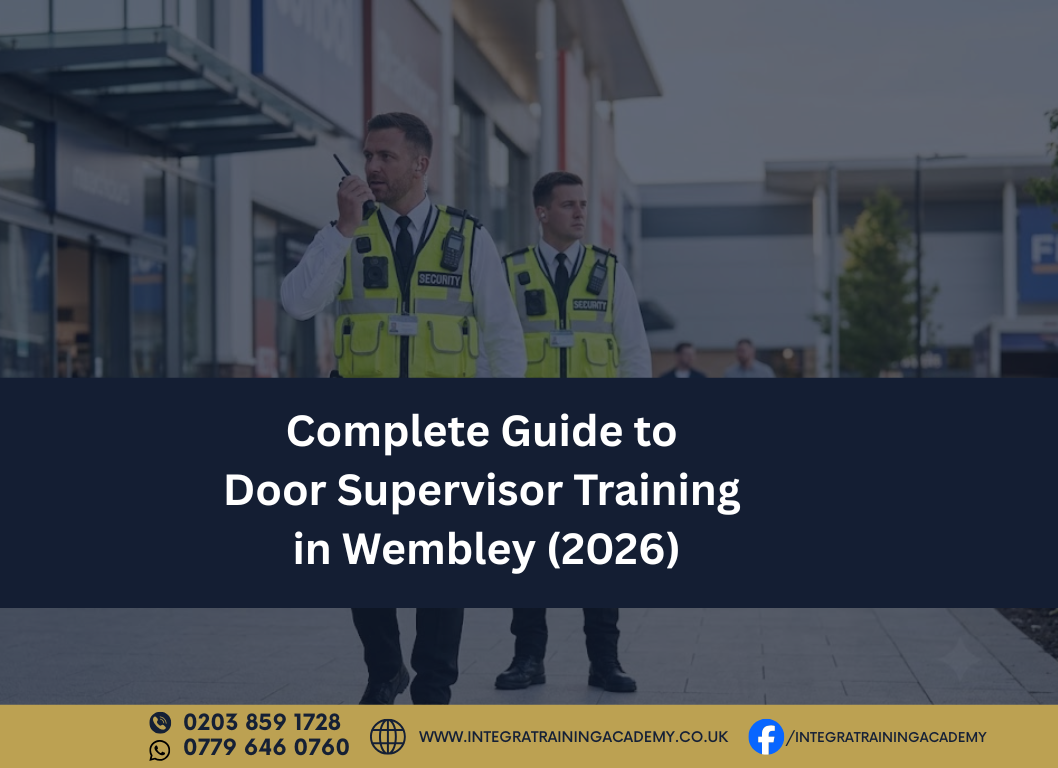
Door Supervisor Training in Wembley remains one of the most popular entry routes into the UK's private security industry. As businesses across Wembley, Brent, Harrow, Ealing, Greater London, and the wider UK continue to prioritise public safety and professional security, demand for trained and licensed Door Supervisors continues across sectors including hospitality, retail, events, corporate security, and residential developments.
Whether you're changing careers, entering the workforce for the first time, or looking to expand your professional qualifications, completing recognised security training can help you develop practical skills that employers value. However, understanding the journey from choosing the right course to obtaining the appropriate licence and exploring career opportunities is equally important.
This comprehensive guide explains everything you need to know about Door Supervisor training, including what you'll learn, who the qualification is suitable for, the preparation required before starting, and what comes next after successfully completing your course. Throughout the article, we'll also point you towards more detailed resources covering specific aspects of the licensing and career journey, helping you build a complete understanding without overwhelming you with unnecessary detail.
“Important: This guide reflects publicly available guidance from the Security Industry Authority (SIA) at the time of writing in 2026. Licensing requirements, qualification standards, application procedures, and regulatory guidance may change over time, so always refer to the latest official SIA information before beginning your licensing journey.”
What Is Door Supervisor Training?
Door Supervisor training is a licence-linked qualification designed for people who want to work in front-line roles within the UK's private security industry. It provides learners with the knowledge, practical skills, and professional behaviours expected when protecting people, property, and public spaces.
The qualification goes far beyond standing at the entrance of licensed premises. Modern Door Supervisors often work in customer-facing environments where communication, professionalism, observation, and decision-making are just as important as security awareness.
Completing recognised Door Supervisor Training in Wembley helps learners build confidence in managing situations calmly, supporting public safety, and responding appropriately to incidents while working within UK legislation and industry standards.
The Purpose of the Qualification
The qualification aims to prepare learners for real-world security environments by developing competencies in areas such as:
-
Conflict management
-
Customer service
-
Professional communication
-
Physical intervention awareness
-
Risk awareness
-
Incident reporting
-
Public safety
-
Emergency procedures
Rather than focusing solely on physical security, the course encourages learners to adopt a professional and preventative approach that balances safety, customer care, and legal responsibilities.
Why Professional Training Matters
The private security industry places significant responsibility on front-line professionals. Door Supervisors frequently interact with members of the public, colleagues, emergency services, and venue management.
Professional training helps learners understand how to:
-
Communicate effectively under pressure
-
De-escalate potentially challenging situations
-
Protect members of the public
-
Follow lawful procedures
-
Recognise security risks
-
Work confidently as part of a wider security team
Employers generally expect licensed security professionals to demonstrate both technical knowledge and strong interpersonal skills, making structured training an important first step towards a security career.
Types of Roles Supported by the Qualification
A Door Supervisor qualification can support employment opportunities across a wide range of sectors, including:
-
Licensed venues
-
Hospitality
-
Retail security
-
Event security
-
Corporate security
-
Residential developments
-
Concierge security
-
Construction security
-
Commercial property security
Although individual employers may have additional requirements, the qualification provides a broad foundation that can support various front-line security roles.
Who Should Take a Door Supervisor Course?
One of the strengths of the qualification is that it attracts learners from many different backgrounds. Some are entering the security industry for the first time, while others are looking to expand existing skills or change careers.
Career Changers
Many adults choose Door Supervisor training after working in completely different industries.
Common examples include people with experience in:
-
Hospitality
-
Retail
-
Customer service
-
Warehousing
-
Logistics
-
Construction
-
Public-facing roles
Many of the communication and customer service skills developed in these industries transfer well into professional security work.
Students Looking for Flexible Career Opportunities
Students and recent graduates may complete the qualification to improve their employment prospects while studying or after completing education.
Security work can offer opportunities across evenings, weekends, major events, and commercial premises, although available roles depend on employer requirements and licensing.
Hospitality Professionals
People already working in bars, restaurants, hotels, and entertainment venues often choose to expand their responsibilities by obtaining a Door Supervisor qualification.
Their existing experience in customer interaction, problem-solving, and public-facing environments can provide a useful foundation for security roles.
Retail Workers
Retail employees frequently develop valuable transferable skills such as:
-
Customer service
-
Observation
-
Communication
-
Problem-solving
-
Working under pressure
These skills often complement security training and may support career progression into retail security or broader commercial security roles.
Job Seekers
Individuals seeking new employment opportunities may view Door Supervisor training as a pathway into a regulated profession.
While completing the qualification does not guarantee employment, it equips learners with recognised knowledge that many employers expect for licensed security positions.
Existing Security Staff
Some Security Officers decide to complete Door Supervisor training to broaden their career options and qualify for additional front-line roles.
This can increase flexibility when applying for positions across different sectors of the private security industry.
What Will You Learn During Door Supervisor Training?
The course combines theory with practical learning to help learners understand the responsibilities of working as a professional Door Supervisor.
While exact delivery methods may vary between approved providers, licence-linked qualifications generally cover several core subject areas.
Working in the Private Security Industry
Learners begin by developing an understanding of how the UK's private security industry operates.
Typical topics include:
-
Professional responsibilities
-
Legal considerations
-
Ethical conduct
-
Communication standards
-
Equality and diversity
-
Health and safety
-
Data protection awareness
-
Incident reporting
This knowledge helps learners understand both their responsibilities and the expectations placed upon licensed security professionals.
Conflict Management
Conflict management is one of the most valuable skills developed during the qualification.
Rather than encouraging confrontation, learners are taught practical techniques for:
-
Recognising early warning signs
-
Managing difficult conversations
-
Using effective communication
-
Reducing tension
-
De-escalating conflict
-
Protecting public safety
These skills are useful across almost every security environment.
Physical Intervention
Door Supervisors may occasionally need to respond to situations where physical intervention becomes necessary.
Training focuses on:
-
Safety
-
Proportionality
-
Legal responsibilities
-
Risk awareness
-
Team communication
-
Safe working practices
Learners also understand that physical intervention should only be considered where appropriate and should always prioritise safety.
Customer Service
Modern security professionals are often the first people visitors meet.
Because of this, the qualification places considerable emphasis on customer service.
Learners develop skills in:
-
Professional communication
-
Active listening
-
Positive interactions
-
Building trust
-
Supporting visitors
-
Handling complaints professionally
Excellent customer service contributes to both public confidence and organisational reputation.
Counter Terrorism Awareness
Security personnel play an important role in recognising suspicious activity and supporting wider public safety initiatives.
Training introduces learners to key awareness principles, including:
-
Identifying suspicious behaviour
-
Reporting concerns appropriately
-
Situational awareness
-
Protecting crowded places
-
Working alongside emergency services when required
Industry guidance from organisations such as ProtectUK provides valuable resources that complement professional security training.
Emergency Procedures
Security professionals may be among the first people required to respond during emergencies.
Training introduces procedures relating to:
-
Fire safety awareness
-
Evacuation procedures
-
Emergency communication
-
Incident reporting
-
Dynamic risk assessment
-
Public reassurance
Understanding these principles helps learners respond more confidently during unexpected situations.
Professional Conduct
Professionalism remains a core expectation throughout the private security industry.
Learners are encouraged to demonstrate:
-
Integrity
-
Reliability
-
Respect
-
Accountability
-
Professional appearance
-
Confidentiality
-
Teamwork
These qualities can significantly influence long-term career development.
What Are the Requirements Before Starting?
Before enrolling on Door Supervisor Training in Wembley, it's helpful to understand the basic preparation required. Although specific training providers may have their own administrative procedures, learners should ensure they meet the relevant eligibility criteria for undertaking a licence-linked qualification and, later, applying for an SIA licence.
Rather than viewing these as obstacles, it's best to think of them as practical steps that help prepare you for working responsibly in the private security industry.
Basic Eligibility
Most learners should ensure they:
-
Meet the minimum age requirements set by current SIA guidance.
-
Can provide suitable identification where required.
-
Are prepared to complete assessments as part of the qualification.
-
Intend to pursue front-line security roles after training.
Eligibility requirements and licensing criteria can change over time, so always verify the latest guidance with the Security Industry Authority (SIA) before making important decisions.
Emergency First Aid at Work (EFAW)
A recognised Emergency First Aid at Work (EFAW) qualification is normally required before beginning the Door Supervisor qualification.
This helps ensure learners have a basic understanding of first aid principles before undertaking front-line security training.
Training providers can advise which first aid qualifications meet current requirements.
Identification and Documentation
Learners should also prepare appropriate identification and any supporting documentation requested by their training provider.
Having these documents ready before your course begins can help avoid unnecessary delays later in the licensing journey.
Choosing an Approved Training Provider
Selecting a reputable provider is one of the most important decisions you'll make.
When comparing providers, consider:
-
Experienced instructors
-
Clear course information
-
Student support
-
Convenient Wembley location
-
Flexible course dates
-
Good learner reviews
-
Recognised awarding organisation
A quality training provider does more than deliver a qualification they help learners understand professional expectations and prepare for the next stages of their security career.
Door Supervisor Training at a Glance
|
Topic |
What You'll Learn |
|
Course Overview |
Purpose of the qualification, professional responsibilities, and career pathways |
|
Entry Requirements |
Basic eligibility, First Aid preparation, identification, and course readiness |
|
Training Content |
Conflict management, customer service, physical intervention, public safety, emergency procedures, and professional conduct |
|
Licensing |
General understanding of the SIA licensing journey and why official guidance matters |
|
Career Opportunities |
Overview of sectors including retail, hospitality, events, corporate, and residential security |
|
Professional Development |
Continuing learning, refresher training, specialist qualifications, and long-term career progression |
What Happens After Completing the Course?
Successfully completing Door Supervisor Training in Wembley is an important milestone, but it marks the beginning of your professional journey rather than the end. After passing the required assessments and receiving your qualification, there are still a few important stages before you can begin applying for many front-line security roles.
Although the overall process is straightforward, every learner's journey is slightly different depending on factors such as previous experience, career goals, and licensing requirements.
Typically, the next stages include:
-
Receiving your qualification from the awarding organisation.
-
Preparing your supporting documentation.
-
Applying for an SIA licence, where required.
-
Waiting for your application to be assessed.
-
Beginning your search for suitable security roles.
Rather than covering every licensing step in detail here, you can find a complete overview in our guide, What Happens After Completing Door Supervisor Training in Wembley?, which explains the post-training journey, qualification, licensing, and preparing for employment.
Remember that qualification alone does not automatically authorise someone to undertake licensable front-line security activities. Applicants should always follow the latest guidance published by the Security Industry Authority (SIA), as licensing requirements and procedures may change over time.
Career Opportunities After Training
One reason many learners choose Door Supervisor training is the variety of career paths available within the private security industry. The qualification is recognised across numerous sectors where employers require trained, customer-focused security professionals.
While job availability depends on employer requirements, local demand, experience, and licensing status, the qualification can support applications for roles in many different environments.
Event Security
Large sporting events, concerts, festivals, exhibitions, and entertainment venues often require professional security teams to help manage public safety.
Responsibilities may include:
-
Crowd management
-
Entry screening
-
Ticket verification
-
Monitoring audience behaviour
-
Supporting emergency procedures
-
Incident reporting
Areas across Wembley and Greater London regularly host major public events, creating opportunities for experienced and newly qualified security professionals alike.
Hospitality
Hotels, restaurants, bars, and licensed venues frequently employ Door Supervisors to maintain a safe and welcoming environment.
Typical duties include:
-
Managing entrances
-
Assisting customers
-
Monitoring occupancy
-
Supporting venue policies
-
Handling incidents professionally
-
Liaising with management
Strong communication and customer service skills are particularly valuable within hospitality security.
Retail Security
Retail businesses continue to invest in professional security as part of wider loss prevention and customer safety strategies.
Door Supervisors working within retail environments may assist with:
-
Customer reassurance
-
Incident reporting
-
Store access monitoring
-
Supporting staff during challenging situations
-
Observing suspicious behaviour
-
Protecting people and property
These roles combine security awareness with excellent customer service.
Corporate Security
Corporate offices and commercial buildings increasingly seek security professionals who can balance professionalism with public-facing responsibilities.
Responsibilities often include:
-
Reception security
-
Visitor management
-
Access control
-
Monitoring building activity
-
Supporting emergency procedures
-
Maintaining professional standards
Corporate security environments often place significant emphasis on communication, presentation, and professionalism.
Construction and Infrastructure
Construction sites and infrastructure projects require effective access control and site security throughout each phase of development.
Security professionals may help by:
-
Monitoring entrances
-
Checking identification
-
Recording visitors
-
Conducting patrols
-
Reporting incidents
-
Supporting health and safety procedures
These environments require attention to detail and strong observation skills.
Residential Developments
Modern residential developments increasingly employ trained security personnel to support resident safety and visitor management.
Responsibilities may include:
-
Concierge security
-
Visitor verification
-
Access control
-
Incident reporting
-
Monitoring communal areas
-
Supporting residents during emergencies
Professional communication and customer care remain essential in these roles.
Education and Public Facilities
Some educational institutions and public buildings employ licensed security personnel to help maintain safe environments for staff, visitors, and students.
Responsibilities vary according to each organisation's operational requirements and risk assessments.
As you explore different sectors, you'll notice that many employers advertise a wide variety of Door Supervisor Jobs in Wembley and across Greater London. Understanding the responsibilities associated with each sector can help you decide which type of security career best matches your interests, experience, and long-term professional goals.
Salary Expectations and Career Growth
One of the most common questions new learners ask is how much they might earn after qualifying.
The answer depends on several factors, including:
-
Experience
-
Employer
-
Location
-
Shift patterns
-
Responsibilities
-
Industry sector
-
Contract type
-
Additional qualifications
Because these variables differ significantly between employers, it is not helpful to rely on a single salary figure.
For example, someone working occasional event shifts may have a very different earning pattern compared with a full-time Corporate Security Officer or Concierge Security professional.
Similarly, experienced Door Supervisors who develop specialist skills or move into supervisory positions may progress differently from someone entering the industry for the first time.
If you're interested in understanding the factors that influence earnings in more detail, read our dedicated guide, How Much Can Door Supervisors Earn in Wembley, which explores salary considerations without making unrealistic promises or guarantees.
Long-Term Career Development
Many people view Door Supervisor training as the first stage of a much longer professional journey.
With experience and continued learning, opportunities may include:
-
Senior Door Supervisor
-
Security Supervisor
-
Security Team Leader
-
CCTV Operator
-
Mobile Patrol Officer
-
Corporate Security Officer
-
Control Room Operator
-
Operations Support
-
Security Manager (experience dependent)
-
Specialist security roles
Career progression depends on performance, employer requirements, continued professional development, and available opportunities rather than qualification alone.
Choosing the Right Door Supervisor Training Provider
Selecting the right training provider is one of the most important decisions you'll make before beginning your security career.
Although many providers deliver the same licence-linked qualification, the quality of teaching, learner support, and overall experience can vary considerably.
When comparing providers, look beyond price alone.
Experienced Instructors
Learning from trainers with genuine industry experience can provide valuable insight into real-world security operations.
Experienced instructors often explain not only what learners need to know, but why those skills matter in professional security environments.
Approved Training Delivery
Choose a provider that delivers recognised licence-linked qualifications through appropriate awarding organisations.
This helps ensure your qualification meets current industry requirements.
Training Facilities
A comfortable learning environment supports better engagement throughout the course.
Consider factors such as:
-
Classroom facilities
-
Practical training space
-
Accessibility
-
Local transport links
-
Learning resources
Student Support
Good providers continue supporting learners throughout their training.
Helpful services may include:
-
Course guidance
-
Assessment preparation
-
Administrative support
-
Clear communication
-
Responsive customer service
Reviews and Reputation
Reading genuine learner feedback can provide useful insight into the overall training experience.
When reviewing testimonials, consider:
-
Teaching quality
-
Organisation
-
Professionalism
-
Learner satisfaction
-
Communication
Convenient Course Scheduling
Flexible course dates can make training easier to fit around existing work or personal commitments.
Many learners appreciate providers offering multiple course dates throughout the year.
Common Mistakes New Learners Make
Most learners successfully complete their training with good preparation.
However, avoiding these common mistakes can make the overall journey smoother.
Choosing Based Only on Price
The cheapest course is not always the best value.
Quality instruction, learner support, experienced trainers, and professional facilities often contribute significantly to the learning experience.
Delaying First Aid Training
Because an appropriate Emergency First Aid at Work qualification is typically required before beginning the Door Supervisor qualification, delaying First Aid training may postpone your overall progress.
Planning ahead helps keep your training timeline on track.
Ignoring Licensing Requirements
Some learners focus entirely on passing the course without researching the wider licensing process.
Understanding the general requirements early can help you prepare appropriate documentation and avoid unnecessary delays later.
Missing Documentation
Leaving identification or supporting documents until the last minute may slow your progress.
Preparing documents in advance is a simple but effective way to stay organised.
Not Preparing for Assessments
Although the qualification is designed to be achievable with proper engagement, learners should still:
-
Attend every session
-
Participate actively
-
Revise course material
-
Ask questions
-
Practise practical activities
Consistent participation generally produces better learning outcomes than last-minute revision.
Door Supervisor Training Preparation Checklist
Use this checklist before starting your course:
✔ Research current SIA guidance.
✔ Choose a recognised training provider.
✔ Arrange your Emergency First Aid at Work qualification if required.
✔ Prepare suitable identification documents.
✔ Check course dates and availability.
✔ Understand the general licensing journey.
✔ Organise time for revision and assessments.
✔ Consider your long-term career goals.
✔ Prepare a professional CV for future job applications.
✔ Stay informed about developments within the private security industry.
By taking time to prepare before your training begins, you can approach the course with greater confidence and focus on developing the practical skills and professional behaviours needed for a successful security career.