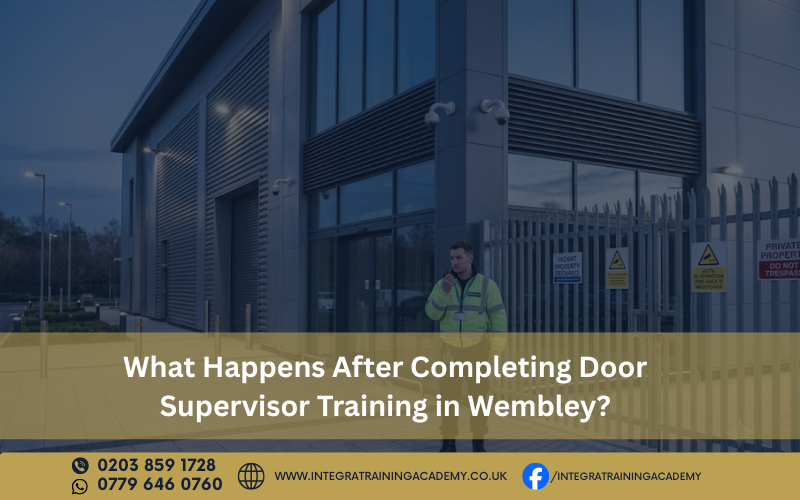
Completing Door Supervisor Training in Wembley is an important milestone, but it is only the beginning of your journey into the UK's private security industry. Successfully passing your training demonstrates that you have developed the knowledge and practical skills required for a licence-linked qualification. The next stages involve obtaining the appropriate SIA licence, preparing for employment, and building a long-term security career through continued professional development.
Across Wembley, Brent, Harrow, Ealing, and the wider Greater London area, employers continue to recruit qualified security professionals for roles in retail, hospitality, corporate offices, events, residential developments, and commercial properties. While completing your training is a significant achievement, becoming a licensed Door Supervisor and gaining practical experience are equally important steps towards securing employment.
This guide explains what typically happens after completing your Door Supervisor qualification, from receiving your certificate and understanding the SIA licensing process to exploring career opportunities and planning your professional development. As licensing requirements and procedures can change, always refer to the latest guidance published by the Security Industry Authority (SIA) before applying for a licence.
Successfully Completing Your Door Supervisor Qualification
Completing your Door Supervisor course means you have successfully finished a recognised licence-linked qualification designed to prepare learners for front-line security roles.
During your training, you will have developed practical knowledge in areas such as:
-
Working in the private security industry
-
Conflict management
-
Customer service
-
Physical intervention
-
Public safety
-
Dynamic risk assessment
-
Emergency procedures
-
Counter terrorism awareness
The qualification is designed to help learners understand both the legal responsibilities and day-to-day expectations of a professional Door Supervisor.
Completing the Assessments
Before the qualification can be awarded, learners must successfully complete the required assessments.
Depending on the qualification specification, these may include:
-
Multiple-choice examinations
-
Practical assessments
-
Observation of physical intervention techniques
Assessment methods are determined by the awarding organisation and must meet current qualification standards.
Successfully completing every required assessment demonstrates that you have achieved the learning outcomes for the qualification.
Receiving Your Qualification
Once all assessments have been successfully completed, your training provider will arrange for your qualification to be processed through the relevant awarding organisation.
Many Door Supervisor qualifications are regulated by Ofqual and awarded through recognised organisations such as Highfield Qualifications, although providers may work with different awarding bodies.
After successful verification, you will receive confirmation that you have achieved your Door Supervisor qualification.
It is important to understand that this qualification is not the same as an SIA licence. Completing the course confirms that you have met the training requirements, but a separate licensing process must normally be completed before undertaking licensable front-line security activities.
What You'll Receive After Passing
Following successful completion of your course, learners typically receive:
-
A recognised Door Supervisor qualification
-
Confirmation of successful assessment
-
Evidence that they have completed a licence-linked qualification
-
A foundation for progressing towards an SIA licence
Training providers may issue documentation in different ways, so learners should follow the guidance provided by their own provider regarding certification and qualification records.
Why Your Qualification Matters
Your qualification demonstrates that you have successfully completed recognised security training covering key industry topics.
Employers value this because it shows you have developed knowledge in areas including:
-
Conflict resolution
-
Customer service
-
Communication
-
Public safety
-
Physical intervention
-
Professional conduct
However, employers recruiting for licensable security roles will normally expect applicants to hold the appropriate SIA licence before beginning front-line duties.
Applying for Your SIA Licence
After achieving your Door Supervisor qualification, the next milestone is applying for an SIA front-line licence issued by the Security Industry Authority (SIA).
Rather than viewing the licence as simply another document, it's helpful to think of it as confirmation that you have met both the training requirements and the licensing standards for front-line security work.
The licensing process generally involves:
-
Completing the required qualification
-
Meeting the SIA's eligibility criteria
-
Identity verification
-
Suitability checks
-
Submitting an application through the official SIA licensing service
Because application procedures, documentation requirements, and processing arrangements may change over time, applicants should always rely on the latest official guidance published by the SIA.
This article provides only a high-level overview of the licensing stage. If you would like to understand the eligibility criteria, required documents, first aid requirements, and preparation in greater detail, read our guide on SIA Door Supervisor Licence Requirements in Wembley Explained before starting your application.
Waiting for Your Licence Decision
After submitting an application, the Security Industry Authority reviews the information provided and carries out the necessary checks before making a decision.
Processing times vary depending on individual circumstances and operational factors, so applicants should avoid relying on unofficial estimates.
During this period, it's sensible to keep an eye on your SIA online account and respond promptly if additional information is requested.
When Can You Start Applying for Security Jobs?
One of the most common questions learners ask after completing their training is when they can begin applying for security roles.
In most cases, employers recruiting for licensable front-line positions expect applicants to hold the appropriate SIA licence before starting work.
Although completing your qualification is an essential achievement, the licence is generally required before carrying out licensable activities covered by the Private Security Industry Act.
Some employers may begin discussing opportunities with applicants who are progressing through the licensing process, while others may require the licence to have already been issued before considering an application.
Because recruitment practices vary between employers, it's worth reading each job description carefully.
What Employers Typically Look For
Recruitment decisions depend on much more than simply holding a qualification.
Employers often look for candidates who demonstrate:
-
Professional communication skills
-
Excellent customer service
-
Reliability
-
Punctuality
-
Teamwork
-
Observation skills
-
Good decision-making
-
Professional appearance
-
Positive attitude
-
Willingness to learn
Practical experience in customer-facing roles can also be valuable, particularly within hospitality, retail, or public-facing environments.
Preparing for Your First Security Role
Before applying for jobs, it can help to organise the following:
-
Your qualification records
-
Your SIA licence (once issued)
-
An up-to-date CV
-
Proof of previous employment where appropriate
-
Professional references if available
Being organised demonstrates professionalism and can make the recruitment process smoother when opportunities arise.
While completing your Door Supervisor qualification is a significant achievement, remember that it marks the beginning—not the end—of your professional journey. Building experience, maintaining high standards, and continuing to develop your skills will help you progress within the private security industry over time.
Career Opportunities After Door Supervisor Training
Completing Door Supervisor Training in Wembley can open the door to a wide range of career opportunities across the UK's private security industry. While your first role may be an entry-level position, the skills developed during training provide a strong foundation for long-term career growth.
Across Wembley, Brent, Harrow, Ealing, Greater London, and throughout the UK, organisations recruit licensed security professionals to protect people, property, and businesses in many different environments.
Below are some of the sectors where qualified Door Supervisors commonly work.
Licensed Premises
Licensed premises are one of the most recognised workplaces for Door Supervisors.
These environments may include:
-
Bars
-
Nightclubs
-
Entertainment venues
-
Live music venues
-
Sports venues
-
Restaurants with licensed premises
Typical responsibilities include:
-
Managing entry points
-
Checking identification where required
-
Monitoring venue capacity
-
Supporting public safety
-
De-escalating conflict
-
Responding to incidents professionally
-
Assisting with safe evacuations when necessary
Strong communication and conflict resolution skills are particularly valuable in these customer-facing roles.
Retail Security
Retail security continues to be an important employment sector for licensed Door Supervisors.
Security officers working in retail environments help create a safe and welcoming atmosphere for customers while supporting loss prevention and operational safety.
Responsibilities may include:
-
Monitoring entrances and exits
-
Deterring theft
-
Assisting customers
-
Responding to incidents
-
Recording observations
-
Liaising with store management
-
Supporting emergency procedures
Retail roles often combine customer service with visible security presence.
Corporate Security
Many businesses employ Door Supervisors within corporate environments such as:
-
Office buildings
-
Business parks
-
Corporate headquarters
-
Financial institutions
-
Commercial developments
Typical duties include:
-
Access control
-
Visitor management
-
Reception security
-
Incident reporting
-
Patrols
-
Supporting emergency procedures
Professionalism, discretion, and excellent communication skills are especially important within corporate security.
Event Security
The events industry regularly recruits licensed security professionals for:
-
Concerts
-
Festivals
-
Sporting events
-
Conferences
-
Exhibitions
-
Community events
Responsibilities often include:
-
Crowd management
-
Ticket verification
-
Access control
-
Public safety
-
Emergency response
-
Customer assistance
Every event presents different challenges, making adaptability and teamwork essential.
Hotels and Hospitality
Hotels, conference venues, and hospitality businesses frequently employ licensed Door Supervisors.
Security professionals in these environments often balance safety responsibilities with high standards of customer service.
Typical duties include:
-
Monitoring entrances
-
Assisting guests
-
Managing visitor access
-
Responding to incidents
-
Liaising with hotel management
-
Supporting emergency procedures
Hospitality security requires a calm, approachable, and professional manner.
Construction and Commercial Security
Construction sites and commercial properties also provide opportunities for licensed security professionals.
Although responsibilities vary between employers, they may include:
-
Site access control
-
Visitor management
-
Perimeter patrols
-
Incident reporting
-
Supporting contractors
-
Monitoring deliveries
-
Protecting equipment and property
These roles often require strong observation skills and attention to detail.
Career Progression Opportunities
As you gain experience, new opportunities may become available within the private security industry.
Possible progression routes include:
-
Senior Security Officer
-
Team Leader
-
Site Supervisor
-
Control Room Operator
-
CCTV Operator
-
Mobile Patrol Officer
-
Security Manager
-
Operations Coordinator
-
Training and Development roles
-
Specialist security positions
Career progression will depend on factors such as experience, employer requirements, additional qualifications, and individual performance.
Skills You'll Continue Developing
Completing your qualification provides a solid foundation, but professional development continues throughout your security career.
Every shift presents opportunities to improve practical and interpersonal skills.
Communication
Effective communication is one of the most valuable skills for any security professional.
You'll continue developing your ability to:
-
Speak clearly and confidently
-
Listen actively
-
Provide directions
-
Manage difficult conversations
-
Communicate professionally with colleagues, customers, and emergency services
Conflict Resolution
Conflict management is rarely static.
As you gain experience, you'll become more confident in:
-
Recognising early warning signs
-
Defusing tension
-
Remaining calm under pressure
-
Making proportionate decisions
-
Maintaining professionalism
Experience often improves judgement in challenging situations.
Customer Service
Modern security roles involve much more than monitoring premises.
Many employers value security professionals who can:
-
Welcome visitors
-
Assist customers
-
Answer enquiries
-
Provide reassurance
-
Represent the organisation professionally
Excellent customer service often distinguishes experienced security professionals.
Observation Skills
Observation is central to effective security work.
With experience, you'll become better at:
-
Identifying unusual behaviour
-
Recognising security risks
-
Monitoring busy environments
-
Recording accurate observations
-
Supporting investigations through detailed reporting
Incident Reporting
Clear documentation supports effective security operations.
You'll continue improving your ability to:
-
Record incidents accurately
-
Maintain factual reports
-
Document evidence professionally
-
Communicate important information to management
Accurate reporting contributes to accountability and future risk management.
Teamwork
Security professionals regularly work alongside:
-
Security officers
-
Reception staff
-
Venue managers
-
Facilities teams
-
Emergency services
-
Event organisers
Strong teamwork supports safer and more efficient operations.
Decision-Making
Security work often requires quick but balanced judgement.
Experience helps develop confidence when:
-
Assessing risks
-
Prioritising incidents
-
Following procedures
-
Escalating concerns appropriately
Professional decision-making comes from combining training with practical experience.
Professional Conduct
Employers expect licensed Door Supervisors to demonstrate professionalism at all times.
This includes:
-
Reliability
-
Integrity
-
Respect
-
Accountability
-
Confidentiality
-
Ethical behaviour
Maintaining high professional standards supports both career progression and public confidence.
Continuing Your Professional Development
The security industry continues to evolve, making ongoing learning an important part of long-term career success.
Many experienced security professionals continue developing their knowledge through additional qualifications and refresher training.
Examples include:
-
CCTV Operator Training
-
Emergency First Aid at Work
-
Door Supervisor Refresher Training
-
Security Guard Refresher
-
Specialist security qualifications
-
Leadership and supervisory training
-
Customer service development
-
Health and safety training
Additional qualifications can broaden your knowledge and prepare you for more specialised or senior roles, depending on your career goals.
Tips for Starting Your Security Career
Starting your first security role can feel exciting and challenging. A little preparation can help you make a positive impression on employers.
Prepare a Professional CV
Highlight:
-
Your Door Supervisor qualification
-
Previous customer service experience
-
Transferable skills
-
Volunteer work (if relevant)
-
Communication and teamwork abilities
Tailor your CV to the type of security role you're applying for.
Register with Recruitment Agencies
Many employers recruit security staff through specialist recruitment agencies.
Registering with reputable agencies can help you learn about available opportunities across Wembley, Greater London, and surrounding areas.
Build Interview Confidence
Prepare for common interview topics such as:
-
Customer service experience
-
Conflict resolution
-
Teamwork
-
Professional conduct
-
Problem-solving
-
Situational judgement
Employers often value attitude and professionalism alongside qualifications.
Keep Your Qualifications Organised
Maintain copies of:
-
Qualification certificates
-
First Aid certificates
-
Employment records
-
Training documentation
-
Your SIA licence once issued
Being organised can simplify future job applications.
Maintain Professional Standards
Your reputation begins from your first day in the industry.
Demonstrate:
-
Reliability
-
Punctuality
-
Respect
-
Professional appearance
-
Positive communication
-
Continuous willingness to learn
These qualities often contribute to long-term career progression.
Stay Informed About SIA Requirements
The private security industry changes over time.
Keeping up to date with guidance from the Security Industry Authority (SIA) and participating in refresher training where required will help you remain compliant and continue developing your career.
Career Progression Overview
|
Career Stage |
Typical Next Step |
|
Complete Door Supervisor Training |
Receive your qualification |
|
Meet licensing requirements |
Apply for an SIA licence |
|
Licence granted |
Apply for entry-level security roles |
|
Gain practical experience |
Progress into specialist or supervisory positions |
|
Continue professional development |
Complete refresher and advanced security training |
Completing your qualification is the foundation of a rewarding career, but continued learning, practical experience, and professionalism are what help many security professionals progress into more senior roles over time.