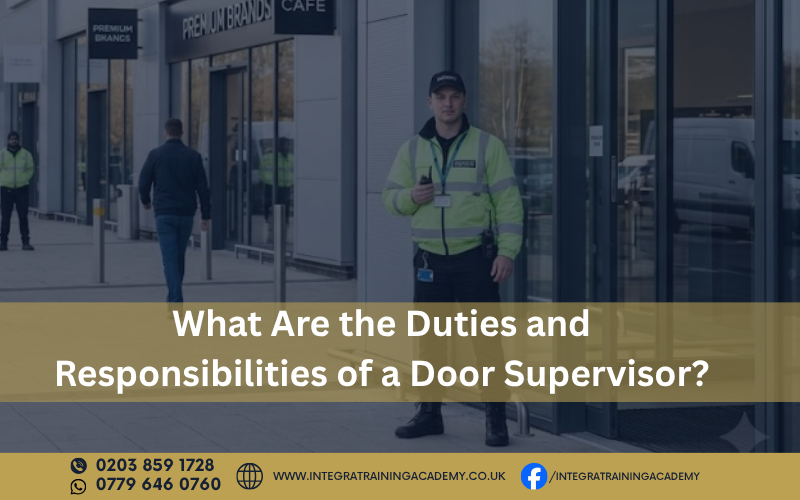
A door supervisor is often associated with the entrance of a nightclub, pub or bar, but controlling access is only one part of the role. The work can involve customer interaction, observation, queue management, conflict de-escalation, incident response and supporting a safe environment throughout a shift.
In the UK, the exact duties depend on the venue, employer, operating environment, event, crowd size, venue procedures and responsibilities assigned to the security team. A busy nightclub may require a different approach from a smaller licensed premises or a large public event.
Understanding the full range of door supervisor duties and responsibilities therefore requires looking beyond the entrance and considering how security, communication and public safety work together.
What Is the Role of a Door Supervisor?
The role of door supervisor is generally centred on helping maintain safety and security at licensed premises and other environments where door supervision is required.
This can include managing access, monitoring people and the surrounding environment, communicating with customers, identifying potential risks and responding appropriately when incidents occur.
A person working in this role may be positioned at an entrance for part of a shift, but their responsibilities can extend throughout the venue and its immediate surroundings, depending on the assignment.
Door supervision also involves professional judgement. A situation may require nothing more than a polite explanation, while another may require assistance from colleagues, venue management or emergency services.
The work is therefore not simply about enforcing rules. It involves understanding the environment, following established procedures and making appropriate decisions within the responsibilities of the role.
What Are the Main Door Supervisor Duties?
The door supervisor duties performed during a shift can vary, but several responsibilities are common across many licensed premises and event environments.
Managing Entry and Access
Access control is one of the most recognisable responsibilities.
At a licensed premises, this may involve monitoring entrances, managing queues and checking identification where required by venue procedures. Age verification may also form part of the entry process where applicable.
Entry management can involve observing behaviour as well as checking documentation. For example, someone who appears significantly intoxicated or whose behaviour presents a concern may require further consideration in accordance with the venue's policies and applicable requirements.
Managing access also means communicating decisions professionally. If entry is refused, a clear explanation can help reduce confusion and prevent an ordinary disagreement from developing into a confrontation.
The objective is not simply to move people through an entrance. It is to manage access in an orderly way while supporting the venue's security and safety procedures.
Monitoring Customers and the Venue
Observation is another important part of the job.
A security professional needs to remain aware of what is happening around them, including changes in customer behaviour, crowd movement and conditions that could create a safety concern.
Situational awareness may involve noticing:
-
Rising tension between customers
-
Unusual behaviour around entrances or restricted areas
-
Congestion
-
Potential hazards
-
Changes in crowd behaviour
-
People who appear distressed or vulnerable
-
Situations that may require assistance
This does not mean assuming that unusual behaviour automatically indicates wrongdoing. Observation is about recognising changes and assessing them appropriately rather than jumping to conclusions.
Good observation can also support prevention. Identifying a developing disagreement early may provide an opportunity for calm communication before it becomes a more serious incident.
Maintaining Customer and Public Safety
Customer safety is closely connected with security responsibilities.
Door supervisors may identify hazards, monitor movement around entrances and exits, support venue procedures and respond to concerns raised by customers or staff.
For example, a crowded entrance can become difficult to manage if people are arriving and leaving at the same time. Effective access and crowd management can help maintain orderly movement and reduce unnecessary congestion.
The same principle applies inside entertainment and hospitality venues. If a security professional notices a potential hazard or unusual situation, they may need to report it or take appropriate action within their assigned responsibilities.
The precise responsibility for dealing with a particular safety issue depends on the venue's procedures and the roles assigned to different members of staff.
Managing Queues and Crowds
Queue management may appear straightforward, but it can become more challenging during peak periods.
Large numbers of people arriving together can create pressure around entrances, particularly at popular nightclubs, events and busy licensed premises. People may become impatient, groups may attempt to move ahead of others and disagreements can develop.
A door supervisor may help maintain an orderly queue, communicate expected procedures and monitor behaviour as people wait.
Crowd management also involves awareness of movement. The security team needs to recognise when an area is becoming congested or when crowd behaviour is changing.
Good queue management can therefore support both customer experience and public safety.
Communicating With Customers
Communication is fundamental to the job.
A large part of the working day can involve ordinary conversations rather than incidents. Customers may ask about entry requirements, directions, queues, venue rules or why a particular decision has been made.
Effective communication involves more than speaking clearly. Listening is equally important.
A calm conversation can sometimes resolve a disagreement before it escalates. A person who initially appears confrontational may simply be confused or frustrated about a decision.
Professional communication should remain respectful even when the customer is not behaving cooperatively. Clear explanations, appropriate tone and patience can all contribute to better outcomes.
This is one reason customer awareness forms part of the wider door supervisor responsibility. Security and customer interaction are not completely separate activities.
Dealing With Difficult Situations
Conflict management is an important aspect of venue security.
Disagreements can arise over entry decisions, behaviour inside a venue, queues, interactions between customers or other circumstances.
The initial response should depend on what is actually happening. Where appropriate, verbal communication and de-escalation may help reduce tension.
Useful professional principles include:
-
Remaining calm
-
Listening to what people are saying
-
Communicating clearly
-
Recognising when behaviour is changing
-
Avoiding unnecessary confrontation
-
Following venue procedures
-
Informing colleagues when assistance is appropriate
There is no single response that suits every incident. The circumstances, level of risk and venue procedures all matter.
A door supervisor is not a police officer and should not be treated as having police powers simply because they work in a security role. Serious incidents may require the involvement of the police or other emergency services.
Responding to Incidents
When an incident occurs, the response may involve several stages.
First, the situation needs to be assessed. The security team may then communicate with colleagues, follow the venue's established procedures and take appropriate steps to support people's immediate safety.
Depending on the circumstances, this can include requesting assistance, informing venue management or contacting emergency services.
The response should be proportionate to the situation and within the person's responsibilities.
After an incident, relevant information may need to be recorded according to workplace procedures. Accurate reporting can help establish what happened, support management decisions and ensure important information is available to others.
Working With Other Staff
Door supervisors normally form part of a wider operational team.
Depending on the venue, this may include:
-
Venue managers
-
Bar and hospitality staff
-
Event staff
-
Other security personnel
-
CCTV operators
-
Emergency responders
Each group can have different responsibilities, making communication important.
For example, CCTV operators may identify activity that security personnel cannot immediately see from their position. Venue staff may have information about a customer or operational issue. A manager may need to coordinate the wider response to an incident.
Good teamwork allows relevant information to move between people quickly and helps avoid confusion when circumstances change.
Reporting and Documentation
Incident reporting is another important responsibility.
Not every shift will involve a serious incident, but relevant events, concerns or observations may need to be recorded according to the employer's or venue's procedures.
A useful report should be factual and accurate rather than based on assumptions. Depending on workplace requirements, information may include what happened, when it occurred, who was involved and what actions were taken.
The exact documentation used can vary between employers and venues, so there is no single reporting process that applies identically everywhere.
Good records can nevertheless help with handovers, management review and understanding recurring concerns within a venue.
Door Supervisor Responsibilities During a Typical Shift
The responsibilities of a security professional can change as the venue moves through different stages of operation.
Before Opening
Before customers arrive, preparation may involve:
-
Attending a team briefing
-
Understanding venue procedures
-
Confirming assigned positions or responsibilities
-
Checking relevant areas
-
Becoming familiar with entrances and exits
-
Identifying potential concerns
-
Establishing communication arrangements
Preparation helps the team understand what is expected before the venue becomes busy.
During Opening and Peak Periods
Once customers begin arriving, responsibilities may shift towards:
-
Managing entry
-
Checking identification where required
-
Monitoring queues
-
Communicating with customers
-
Observing behaviour
-
Monitoring crowd movement
-
Sharing relevant information with colleagues
During peak periods, several of these activities may happen simultaneously.
During Incidents
If an incident occurs, the response may involve:
-
Assessing what is happening
-
Communicating with colleagues
-
Using verbal de-escalation where appropriate
-
Following established venue procedures
-
Requesting assistance when necessary
-
Contacting emergency services where appropriate
-
Recording relevant information afterwards
The correct response depends on the circumstances rather than following a universal formula.
During Closing
At the end of the operating period, responsibilities may include monitoring customers as they leave, supporting orderly movement and communicating any outstanding concerns.
A handover may also be required, particularly if another team is taking responsibility for the premises.
Relevant reporting should be completed according to workplace procedures.
The important point is that these stages are not identical for every shift. A small pub, busy nightclub, hospitality venue and large event can each require different arrangements.
What Skills Does a Door Supervisor Need?
The responsibilities of the role depend heavily on professional skills.
Communication
Clear communication helps security personnel explain decisions, manage queues, work with colleagues and reduce misunderstandings.
Observation
Good observation helps identify changes in behaviour, developing conflicts, hazards and other concerns before they become more serious.
Situational Awareness
Situational awareness means understanding not just what one person is doing, but how people, crowd movement and the surrounding environment are interacting.
Patience
Customers may be frustrated, confused or unwilling to accept a decision. Patience can create an opportunity for communication rather than unnecessary escalation.
Decision-Making
The responsibilities of a door supervisor often involve making decisions based on the circumstances, available information and venue procedures.
Conflict Management
Understanding how disagreements develop can help security personnel communicate effectively and recognise when additional assistance is needed.
Emotional Control
Remaining composed under pressure supports clearer thinking and professional communication.
Teamwork
Security operations are rarely performed completely alone. Sharing information and coordinating with colleagues can make responses more effective.
Professionalism
A security professional may interact with hundreds of members of the public during a shift. Professional conduct helps maintain appropriate boundaries and supports trust.
Customer Awareness
Security and customer service can overlap. A customer asking for help, reporting a concern or appearing vulnerable may require attention even when there is no security incident.
Attention to Detail
Small details can matter. A change in crowd behaviour, an unusual hazard or information provided by a colleague may become relevant later.
These skills form part of the wider professional preparation required for the role. For someone considering entering the profession, understanding the training, licensing and other steps involved can provide useful context alongside the day-to-day responsibilities explained above. The process is covered in How to Become a Door Supervisor in the UK.
What Is the Difference Between a Door Supervisor and a Security Guard?
Door supervisors and security guards both work within the private security industry, but their typical environments and responsibilities can differ.
A security guard may commonly focus on protecting property, controlling access, monitoring premises and supporting site security. Depending on the assignment, this could involve offices, construction sites, warehouses, retail premises or other locations.
Door supervision is particularly associated with licensed premises and environments where managing public access, customer interaction and venue safety are important.
There can be overlap between the two roles. Both may involve observation, access control, communication, incident response and reporting.
The main Difference Between a Door Supervisor and a Security Guard is the working environment and the specific responsibilities attached to the assignment. The Security Industry Authority (SIA) licensing framework also distinguishes between different security activities, so people should consider the relevant licensing requirements for the work they intend to perform.
Common Misconceptions About Door Supervisor Duties
Door supervisors only stand at entrances.
Entrance management is important, but it is only one part of the role. Observation, communication, crowd awareness, customer safety and incident response may continue throughout the shift.
Their main job is physically removing people.
Physical intervention is not the entire purpose of door supervision. Many situations can be managed through communication, prevention, appropriate decision-making and following venue procedures.
They only work in nightclubs.
Nightclubs are a familiar working environment, but door supervision can also be relevant to other licensed premises, hospitality environments and events.
Security is only about physical intervention.
Much of effective security work involves prevention, observation, communication and risk awareness rather than physical intervention.
Customer service has nothing to do with security.
Customer interaction is often closely connected with security. Clear communication can prevent misunderstandings, manage expectations and reduce the likelihood of unnecessary conflict.
Why Door Supervisor Responsibilities Matter
The responsibilities of door supervisors contribute to the wider operation of a venue.
Effective access management can help maintain orderly entry. Observation can identify developing concerns. Queue and crowd management can support safer movement. Communication can prevent misunderstandings from becoming disputes.
When incidents occur, an organised response can help protect people and ensure the appropriate personnel are informed.
The role also supports venue staff. Bar employees, event teams and managers may rely on security personnel to deal with security-related concerns while they focus on their own responsibilities.
Professional judgement is particularly important because security situations are rarely identical. The right response depends on the circumstances, venue procedures and level of risk.
For people considering the professional requirements of the role, understanding SIA door supervisor training can provide additional context about the preparation and knowledge associated with working in this area of the private security industry.