Completing an Emergency First Aid at Work (EFAW) course gives you the knowledge and practical skills to respond when someone becomes injured or suddenly unwell at work. However, passing the course is only the beginning. First aid skills need regular practice to remain effective, particularly when an emergency requires you to act quickly and confidently.
For trained workplace first aiders, maintaining these skills means more than remembering what was covered during the course. It involves practising CPR, understanding how to use an automated external defibrillator (AED), keeping up with changes in first aid guidance and knowing how to respond to different emergency situations.
The Health and Safety Executive (HSE) strongly recommends annual refresher training to help first aiders maintain their basic skills. This is particularly relevant for people who may go several months without dealing with a real workplace emergency.
In this guide, we explain how to keep your first aid knowledge fresh after EFAW training, which practical skills deserve regular attention and when you should consider further training.
1. Practise Your CPR Skills Regularly
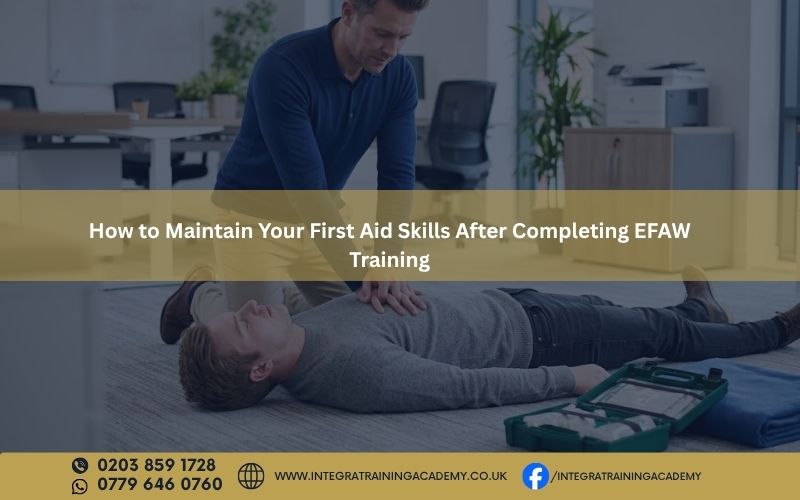
Cardiopulmonary resuscitation (CPR) is one of the most important skills covered during Emergency First Aid at Work training. It is used when someone is unresponsive and not breathing normally, helping maintain blood circulation until professional medical assistance arrives.
Although CPR techniques are taught during training, remembering the correct procedure becomes more difficult without regular practice.
You can maintain your CPR knowledge by:
-
Reviewing the CPR techniques covered during your EFAW course.
-
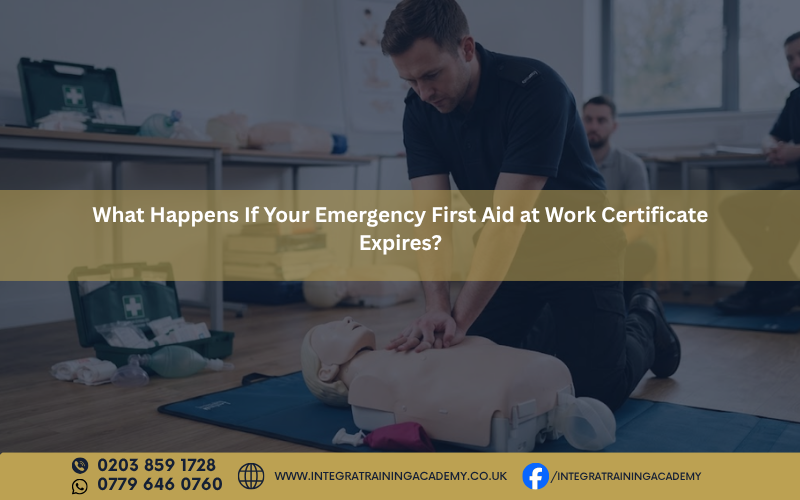
Practising chest compression positioning and technique using an appropriate training manikin.
-
Revisiting the correct approach to checking responsiveness and normal breathing.
-
Learning how to respond if someone becomes unresponsive.
-
Familiarising yourself with current CPR guidance from recognised organisations.
Practical training is particularly valuable because reading about CPR cannot fully replicate the physical experience of performing chest compressions.
The Resuscitation Council UK provides guidance on basic life support and CPR. Its guidance emphasises the importance of maintaining resuscitation skills at an effective level, particularly for people who have a responsibility to respond to emergencies.
Remember that CPR should follow the latest recognised guidance rather than techniques remembered from an older training session.
2. Refresh Your Knowledge of AED Equipment
An automated external defibrillator (AED) can be used during a suspected cardiac arrest to assess the heart's rhythm and, when appropriate, deliver an electrical shock.
Knowing how to use an AED is an important part of workplace emergency preparedness. However, if you have not encountered one since completing your training, you may feel uncertain when faced with the equipment.
To maintain your AED knowledge:
-
Familiarise yourself with the location of AED equipment in your workplace.
-
Review the manufacturer's instructions for the particular device available.
-
Understand how to switch on the AED and follow its spoken instructions.
-
Remember that the device analyses the heart rhythm and advises whether a shock is required.
-
Understand how CPR and AED use work together during a cardiac arrest response.
AEDs are designed to provide instructions during use, but familiarity with the equipment can help reduce hesitation during an emergency.
If your workplace has an AED, ask whether practical familiarisation sessions can be arranged. Training equipment can also help you revisit the steps in a controlled environment.
3. Review Common Workplace First Aid Procedures
EFAW training prepares learners to respond to common workplace emergencies involving injuries and sudden illness.
However, different workplaces present different risks. An office environment, construction site, warehouse and retail premises may all have different first aid considerations.
Rather than concentrating only on theoretical knowledge, think about the situations you could realistically encounter in your working environment.
Some important areas to review include:
Bleeding and wounds: Understand how to assess bleeding, apply appropriate direct pressure and recognise when an injury requires urgent medical attention.
Burns and scalds: Refresh your knowledge of how to respond to burns, including appropriate cooling and when emergency medical assistance is necessary.
Choking: Revisit how to recognise severe choking and the appropriate first aid response for an adult.
Seizures: Understand how to protect someone during a seizure, what actions to avoid and when to seek emergency assistance.
Shock: Learn to recognise possible signs of shock following an injury or sudden illness and understand the importance of obtaining urgent medical help.
Unconsciousness: Refresh your knowledge of how to assess responsiveness and breathing, call for help and provide appropriate first aid.
Reviewing these subjects regularly helps you recognise warning signs and understand what action may be appropriate.
Always work within your training and competence. If an emergency is beyond your knowledge, contact the emergency services and follow their instructions.
4. Attend Annual First Aid Refresher Training
One of the most effective ways to maintain first aid skills after completing EFAW training is to attend regular refresher sessions.
The HSE strongly recommends annual refresher training for workplace first aiders. This recommendation applies to people holding both Emergency First Aid at Work and First Aid at Work qualifications.
Annual refresher training helps first aiders:
-
Revisit essential emergency response procedures.
-
Practise important practical techniques.
-
Identify areas where their knowledge may have become weaker.
-
Keep up to date with changes in first aid procedures.
-
Improve confidence when responding to workplace emergencies.
It is important to understand the difference between refresher training and certificate renewal.
Annual refresher training is recommended but is not a legal requirement. It does not extend the validity of an existing EFAW certificate.
An EFAW certificate is generally valid for three years. Before it expires, the first aider should complete the appropriate requalification training to obtain a new certificate.
For people who have completed their initial training, attending Emergency First Aid at Work Training in Wembley can provide an opportunity to develop the practical knowledge and skills needed to respond to workplace emergencies.
5. Keep Your First Aid Training Materials Accessible
Your EFAW training materials are useful resources for refreshing your knowledge between formal training sessions.
Many learners concentrate heavily on course material while preparing for their assessment but rarely revisit it after receiving their certificate.
Making time to review these resources can help reinforce important information.
Consider keeping your training manual or course notes somewhere accessible so you can revisit:
-
The primary steps involved in responding to an emergency.
-
How to assess an incident and identify immediate dangers.
-
When and how to contact emergency services.
-
Appropriate first aid responses to common injuries.
-
The importance of monitoring someone until professional help arrives.
-
Situations where you should not attempt treatment beyond your competence.
You can also use recognised first aid guidance from the HSE, Resuscitation Council UK and St John Ambulance to support your learning.
Be careful when using older online tutorials or videos. First aid recommendations can change, so make sure the information you follow comes from a reliable and up-to-date source.
6. Learn From Workplace Incidents and Emergency Drills
Practical experience can help you understand how first aid knowledge applies to real working environments.
If you have responded to an incident at work, take time afterwards to consider what happened. Reviewing an incident can help identify areas where you felt confident and areas where additional training may be beneficial.
For example, you might consider:
-
Did you recognise the emergency quickly?
-
Were you familiar with the location of the first aid kit?
-
Did you know how to contact the emergency services?
-
Were you confident using the available first aid equipment?
-
Did you communicate clearly with other people present?
Workplace emergency drills can also help first aiders practise their responsibilities without putting anyone at risk.
Employers can organise simulated emergency scenarios, allowing staff to become familiar with emergency procedures, communication arrangements and the location of first aid equipment.
For example, a warehouse might organise a simulated incident involving a worker who has collapsed. The exercise could help first aiders practise raising the alarm, accessing equipment and following the appropriate emergency response procedure.
These exercises should be planned carefully and should not involve unsafe or misleading practical demonstrations.
7. Understand When Your EFAW Certificate Needs Renewing
Maintaining your first aid knowledge and keeping your qualification valid are two different responsibilities.
Under the Health and Safety (First-Aid) Regulations 1981, employers must make appropriate first aid arrangements based on their workplace circumstances.
For workplace first aiders, an EFAW certificate generally lasts three years. Before the certificate expires, the individual needs to complete the appropriate EFAW requalification training to obtain another certificate.
If your certificate has expired, you should not assume that attending an informal refresher session automatically restores your qualification.
You should speak to a competent training provider about the appropriate training required for your circumstances.
It is also useful to keep a record of:
-
Your original EFAW training date.
-
The certificate issue and expiry dates.
-
Any refresher training attended.
-
Additional first aid training completed.
-
Any practical training sessions or workplace exercises.
Keeping these records makes it easier to identify when further training is due.
If you want to understand the renewal process in more detail, our guide explains how to Renew an Emergency First Aid at Work Certificate, including the importance of completing the appropriate training before your existing qualification expires.
8. Build First Aid Practice Into Your Workplace Routine
Maintaining first aid skills should not depend entirely on attending a formal training course every few years.
Employers and workplace first aiders can make ongoing practice part of their normal health and safety arrangements.
Here are some practical ways to do this:
Schedule regular knowledge reviews: Set aside time to revisit essential first aid procedures and discuss any areas where additional training may be useful.
Check first aid equipment: Make sure first aid kits are accessible, appropriately stocked and that any equipment requiring inspection is checked according to the manufacturer's instructions.
Know your emergency arrangements: Make sure you understand how to contact emergency services, where to find first aid equipment and who else is trained to provide assistance.
Discuss workplace risks: Review the types of injuries and illnesses that could occur in your particular working environment.
Encourage team participation: Other employees should understand basic emergency arrangements, including how to raise the alarm and locate a trained first aider.
Review training needs: If workplace activities or risks change, employers should consider whether existing first aid arrangements and training remain appropriate.
The HSE recommends that employers assess their workplace first aid needs and ensure the level of training provided is suitable for the risks involved.
This means that maintaining first aid skills is not simply an individual responsibility. Employers also have a role in supporting trained first aiders and ensuring appropriate arrangements remain in place.
Common Mistakes to Avoid When Maintaining First Aid Skills
Even people who have successfully completed EFAW training can develop gaps in their knowledge if they do not revisit what they have learned.
Some common mistakes include:
Assuming a certificate means skills never need refreshing: Holding a valid certificate does not guarantee that practical skills will remain effective without regular practice.
Relying entirely on memory: Important details can become difficult to recall after long periods without practice. Training materials and recognised guidance should be reviewed regularly.
Confusing annual refreshers with certificate renewal: Annual refresher training is recommended by the HSE, but it does not replace the required three-year requalification process.
Ignoring workplace-specific risks: First aid knowledge should be considered alongside the actual hazards and emergency arrangements in the workplace.
Following outdated advice: Information found in older online videos or articles may no longer reflect current first aid guidance.
Avoiding practical exercises: Reading about first aid is useful, but hands-on practice is essential for maintaining confidence in physical procedures such as CPR.
Avoiding these mistakes can help you remain better prepared to respond when someone needs assistance.