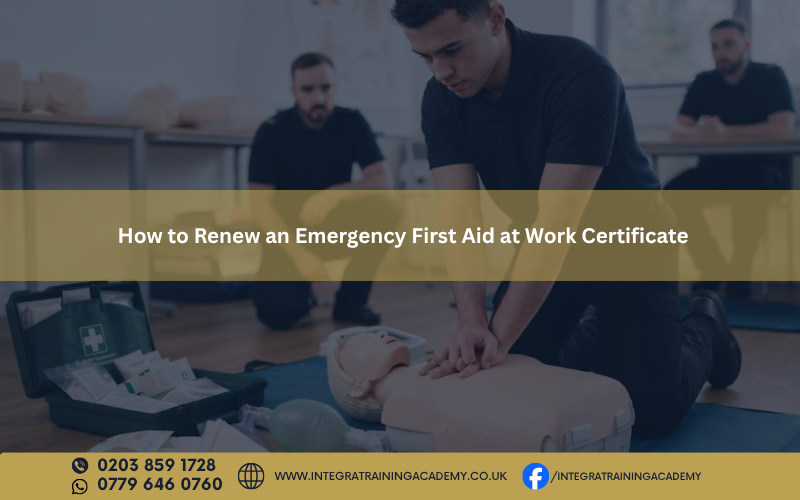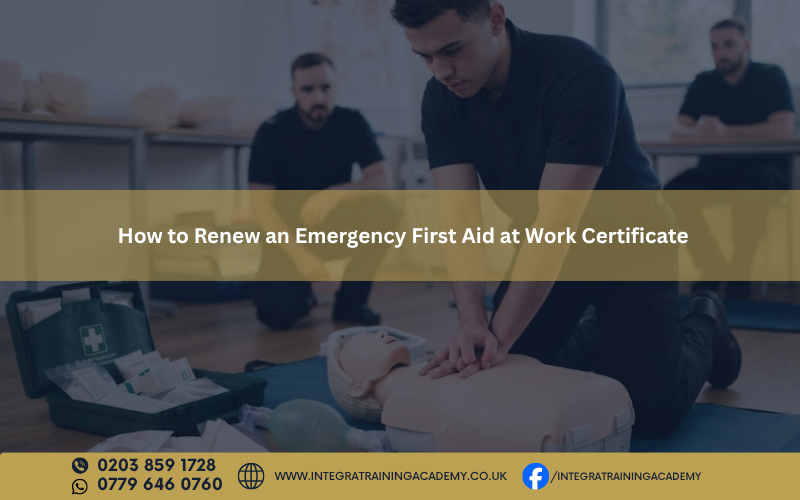
An Emergency First Aid at Work (EFAW) certificate is generally valid for three years. Once it expires, the person holding it may need to complete the full Emergency First Aid at Work course again to maintain their first aid qualification.
Renewing your certificate at the right time helps ensure you can continue providing emergency assistance in the workplace and understand the latest first aid procedures. It also helps employers maintain appropriate first aid arrangements and ensure designated first aiders have suitable, up-to-date training.
If your EFAW certificate is approaching its expiry date, you may be wondering whether you need to take a refresher course, complete the qualification again or arrange training before the certificate expires.
This guide explains how EFAW certificate renewal works in the UK, when you should arrange further training, what happens if your certificate expires and how employers can help their staff maintain their first aid skills.
How Long Does an Emergency First Aid at Work Certificate Last?
An Emergency First Aid at Work certificate is valid for three years from the date of issue. This applies to workplace first aid training certificates, including both EFAW and First Aid at Work (FAW).
Before the three-year period ends, you should arrange the appropriate training to obtain a new certificate if you intend to continue acting as a workplace first aider.
For someone who has completed EFAW training, this generally means undertaking the EFAW course again. Unlike the two-day requalification course available to some FAW certificate holders, EFAW renewal follows the same duration and content as the original EFAW qualification.
The Health and Safety Executive (HSE) provides guidance on certificate validity and retraining. It states that employers should arrange further training before existing certificates expire.
Here is a simple overview:
|
First aid training |
Certificate validity |
Renewal requirement |
|---|---|---|
|
Emergency First Aid at Work (EFAW) |
3 years |
Complete the EFAW course again |
|
First Aid at Work (FAW) |
3 years |
Complete the appropriate FAW requalification course before expiry |
|
Annual refresher training |
Does not extend certificate validity |
Recommended to maintain skills |
If you are considering your first qualification or need to renew your existing training, understanding the Emergency First Aid at Work Training wembley resource can help you explore the training involved and the skills covered.
When Should You Renew Your EFAW Certificate?
Ideally, you should arrange your renewal training several weeks before your current certificate expires. This gives you enough time to find a suitable training date, complete the assessment and receive your updated qualification.
Waiting until the last few days can create unnecessary difficulties, particularly if training dates are limited or your workplace depends on you to provide first aid cover.
Consider arranging your renewal when:
-
Your certificate is approaching its three-year expiry date.
-
Your employer has identified that your first aid qualification needs updating.
-
You are responsible for providing emergency first aid at your workplace.
-
Your role requires you to maintain a current workplace first aid qualification.
-
Your organisation needs to maintain appropriate first aid cover across different shifts or locations.
Check the expiry date on your certificate rather than relying on your memory. If you are unsure when you qualified, contact your original training provider or employer to see whether they hold a record of your training.
How to Renew an Emergency First Aid at Work Certificate
Renewing an EFAW qualification involves completing the appropriate training again and successfully demonstrating the required first aid knowledge and practical skills.
The process is relatively straightforward.
1. Check Your Existing Certificate
Start by checking your current Emergency First Aid at Work certificate.
Look for:
-
Your name and qualification details.
-
The date you completed the training.
-
The certificate issue date.
-
The expiry date, where shown.
-
The awarding organisation or training provider.
These details will help you establish whether your qualification is still valid and when you should arrange further training.
If you cannot find your certificate, ask your previous training provider whether they can confirm your qualification details or provide a replacement record.
2. Find a Suitable EFAW Training Provider
Once you know your renewal date, look for a competent training provider offering Emergency First Aid at Work training.
The HSE expects employers to select a training provider that can demonstrate its competence to deliver appropriate first aid training.
When comparing providers, consider:
-
Whether the course covers the required EFAW learning outcomes.
-
Whether practical training and assessment are included.
-
The awarding organisation and qualification being offered.
-
Course duration and available dates.
-
The training location and accessibility.
-
Whether the course is suitable for your workplace requirements.
Do not assume that every first aid refresher course renews an EFAW qualification. An annual refresher and a full qualification course serve different purposes.
3. Complete the Emergency First Aid at Work Course
To renew your EFAW qualification, you will need to complete the appropriate course again.
The training develops the knowledge and practical ability needed to respond to common workplace emergencies.
Depending on the course syllabus, subjects generally include:
-
Assessing an emergency situation.
-
Managing an unresponsive casualty.
-
Performing cardiopulmonary resuscitation (CPR).
-
Using an automated external defibrillator (AED).
-
Responding to choking.
-
Controlling external bleeding.
-
Recognising and managing shock.
-
Providing appropriate first aid for minor injuries.
-
Understanding when and how to contact emergency services.
The course includes practical activities so learners can demonstrate their ability to apply first aid procedures rather than simply understand the theory.
4. Complete the Required Assessment
During the course, you will need to demonstrate your understanding of the learning outcomes and perform the relevant practical first aid skills.
Assessment methods can include:
-
Practical demonstrations.
-
Trainer observations.
-
Questions and answers.
-
Written or knowledge-based assessments, where applicable.
For example, you may be asked to demonstrate CPR on a training manikin, show how to use an AED trainer or explain the appropriate response to an unresponsive casualty.
You must meet the required assessment criteria to achieve the qualification.
5. Receive Your Updated Certificate
After successfully completing the course and meeting the assessment requirements, you will receive your new EFAW certificate.
The new qualification is generally valid for another three years from its date of issue.
Keep your certificate somewhere accessible and provide a copy to your employer if required. Your employer should also update its training records to reflect your new qualification and expiry date.
What Happens If Your EFAW Certificate Has Expired?
If your Emergency First Aid at Work certificate has expired, you should not assume that you can continue acting as a qualified workplace first aider.
According to HSE guidance, once a first aid certificate expires, the holder is no longer considered competent to act as a workplace first aider for the purposes of the relevant arrangements.
This means you should arrange the appropriate training before returning to the role.
For EFAW holders, the appropriate route is to complete the EFAW course again, including the required training and assessment.
It is also important to understand that there is no automatic extension of your certificate simply because you have booked another course.
For example:
Imagine your EFAW certificate expires on 15 November 2026, but you have booked your next course for 25 November 2026.
Your previous certificate does not remain valid until the new course date. You should not act as a qualified workplace first aider during the gap.
Your employer should arrange suitable alternative first aid cover until you have successfully completed the new qualification.
If your certificate has already expired, speak to a competent training provider and your employer about the appropriate next steps.
Is Annual First Aid Refresher Training the Same as EFAW Renewal?
No. Annual refresher training and full EFAW renewal are two different things.
The HSE strongly recommends annual refresher training to help workplace first aiders maintain their practical skills and remain familiar with current first aid procedures.
However, annual refresher training is not a replacement for completing the appropriate qualification again when the three-year certificate expires.
|
Factor |
Annual refresher training |
EFAW renewal |
|---|---|---|
|
Main purpose |
Maintain existing first aid skills |
Renew the qualification |
|
Frequency |
Recommended annually |
Every three years |
|
Certificate validity |
Does not extend existing validity |
Provides a new three-year certificate |
|
Practical training |
Helps maintain practical ability |
Includes required practical training and assessment |
|
Mandatory? |
Not generally mandatory under the First-Aid Regulations |
Further training is needed to remain a competent workplace first aider after expiry |
Why Is Annual Refresher Training Recommended?
First aid situations can develop quickly, and people may not regularly use their training in real workplace emergencies.
Without regular practice, it can become harder to remember the correct response, particularly when dealing with an unresponsive casualty or performing CPR.
Annual refresher training helps first aiders:
-
Practise essential emergency response skills.
-
Maintain confidence when dealing with casualties.
-
Review CPR and AED procedures.
-
Refresh their knowledge of common workplace injuries.
-
Identify areas where their practical skills need improvement.
Employers can also encourage first aiders to review their training materials and allocate time to practise relevant skills.
This approach helps maintain confidence throughout the three-year qualification period.
What Is the Difference Between EFAW Renewal and FAW Requalification?
Although Emergency First Aid at Work and First Aid at Work are both recognised workplace first aid qualifications, their training requirements and scope are different.
Understanding this distinction is useful if you are considering changing your qualification level or arranging training for employees.
Emergency First Aid at Work (EFAW) is designed to prepare learners to provide emergency first aid to someone who becomes ill or injured at work.
First Aid at Work (FAW) covers the EFAW syllabus and provides additional training to help first aiders deal with a wider range of injuries and illnesses.
The main differences include:
|
Factor |
Emergency First Aid at Work |
First Aid at Work |
|---|---|---|
|
Training scope |
Emergency first aid |
Emergency first aid and a wider range of injuries and illnesses |
|
Initial training |
Typically one day |
Typically three days |
|
Certificate validity |
Three years |
Three years |
|
Renewal route |
Complete the EFAW course again |
Complete the appropriate FAW requalification course |
|
Workplace suitability |
Depends on the employer's first aid needs assessment |
Depends on the employer's first aid needs assessment |
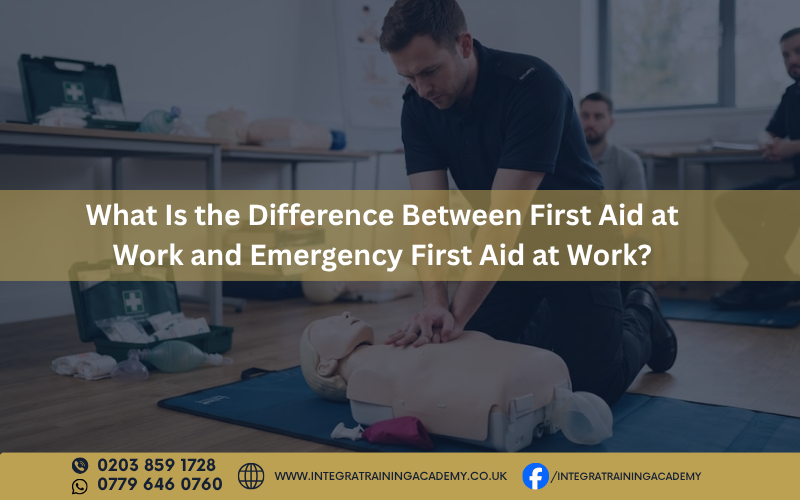
If you want to understand the differences in greater detail, the guide to Difference Between First Aid at Work and Emergency First Aid at Work explains how the two qualifications compare and what each one prepares learners to do.
Should You Upgrade From EFAW to FAW?
Renewing your certificate does not necessarily mean you need to upgrade to a higher-level qualification.
The right training depends on the nature of your workplace and the level of first aid provision required.
For example:
-
A smaller, lower-risk workplace may identify a need for emergency first aid provision.
-
A workplace with more complex hazards may require first aiders trained to a broader level.
-
Businesses operating across several sites may need different levels of first aid cover depending on their activities and working arrangements.
Employers should use a first aid needs assessment to establish the appropriate level of training, the number of first aiders required and the arrangements needed to maintain cover.
If your responsibilities have changed since you first completed EFAW training, discuss your current training requirements with your employer before booking your next course.
What Should Employers Know About EFAW Certificate Renewal?
Employers have an important role in ensuring that workplace first aid arrangements remain suitable and effective.
Under the Health and Safety (First-Aid) Regulations 1981, employers must provide adequate and appropriate equipment, facilities and personnel to ensure employees receive immediate attention if they are injured or become ill at work.
Maintaining up-to-date training records is one practical way to manage these responsibilities.
Keep Track of Certificate Expiry Dates
Employers should maintain a record of employees who have completed first aid training.
Useful details include:
-
Employee name.
-
Qualification obtained.
-
Training provider.
-
Certificate issue date.
-
Certificate expiry date.
-
Planned renewal date.
This information makes it easier to identify employees whose qualifications are approaching expiry.
Arrange Training in Advance
Do not wait until an employee's certificate has expired before arranging further training.
Booking early gives employees more flexibility and helps businesses maintain their first aid arrangements without unnecessary disruption.
Where possible, coordinate training dates around staff availability, shift patterns and operational requirements.
Maintain Appropriate First Aid Cover
An employee with an expired EFAW certificate should not be counted as a competent workplace first aider.
Employers should consider alternative cover while that employee completes further training.
This is particularly relevant to workplaces where staff work different shifts, operate across multiple locations or carry out activities that may involve additional risks.
Review Your Workplace First Aid Needs
A business's first aid requirements can change over time.
For example, an organisation may increase its workforce, introduce new equipment, expand its premises or change its working activities.
Employers should review their first aid needs assessment when relevant circumstances change to establish whether existing arrangements remain appropriate.
The aim is to ensure that the workplace has suitable first aid provision rather than simply having employees with certificates.
How Can You Prepare for Your EFAW Renewal Course?
Preparing before attending your renewal course can make the learning experience more productive.
Although you will cover the required course content again, revisiting your existing knowledge can help you feel more confident during practical activities and assessments.
Here are some useful preparation tips.
Review your previous training materials
Look through your course manual and notes to refresh your understanding of emergency response procedures.
Practise your existing knowledge
Revise the correct approach to assessing a casualty, recognising an emergency and contacting the emergency services.
Refresh your understanding of CPR and AEDs
Review the purpose of CPR and how an automated external defibrillator supports emergency treatment.
Ask about the assessment process
Contact your training provider if you are unsure about the course structure, practical activities or assessment requirements.
Bring your existing certificate details
Your previous qualification information may help the training provider establish your training history and identify the appropriate course.
Most importantly, approach the course as an opportunity to refresh and develop your practical abilities, rather than simply obtaining another certificate.
Common Mistakes to Avoid When Renewing an EFAW Certificate
Some mistakes can create unnecessary problems for employees and employers when arranging first aid training.
Here are several issues to avoid:
-
Waiting until the certificate expires: Book your course in advance to reduce the risk of a gap in workplace first aid cover.
-
Confusing annual refresher training with renewal: A refresher helps maintain skills but does not provide a new three-year qualification.
-
Assuming an expired certificate is still valid: Once the certificate expires, you are no longer considered competent to act as a workplace first aider under the HSE guidance.
-
Choosing an unsuitable training course: Check that the course provides the appropriate EFAW qualification rather than general first aid awareness training.
-
Ignoring changes in workplace responsibilities: Your employer may need to review whether EFAW remains the appropriate training level.
-
Failing to update training records: Make sure your employer receives your updated certificate details after successful completion.
Avoiding these mistakes helps make the renewal process more straightforward and supports effective workplace first aid arrangements.