Choosing between First Aid at Work (FAW) and Emergency First Aid at Work (EFAW) training depends on the risks present in your workplace and the level of first aid your employees may need to provide. Both courses prepare people to respond to workplace injuries and medical emergencies, but they differ in the range of conditions covered and the depth of training.
For employers, choosing the right course is part of providing appropriate workplace first aid. For individuals, understanding the difference can help you select a qualification that matches your job responsibilities and career goals.
This guide explains the differences between FAW and EFAW, including course duration, training content, certificate validity and how to decide which option is suitable for your workplace in the UK.
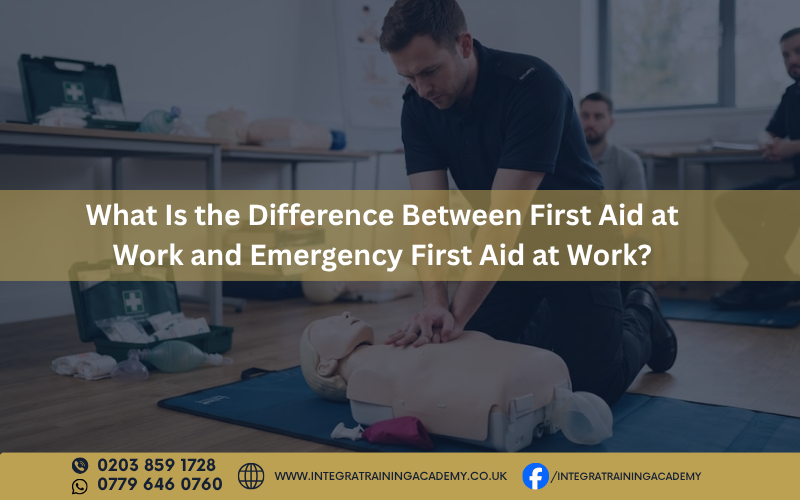
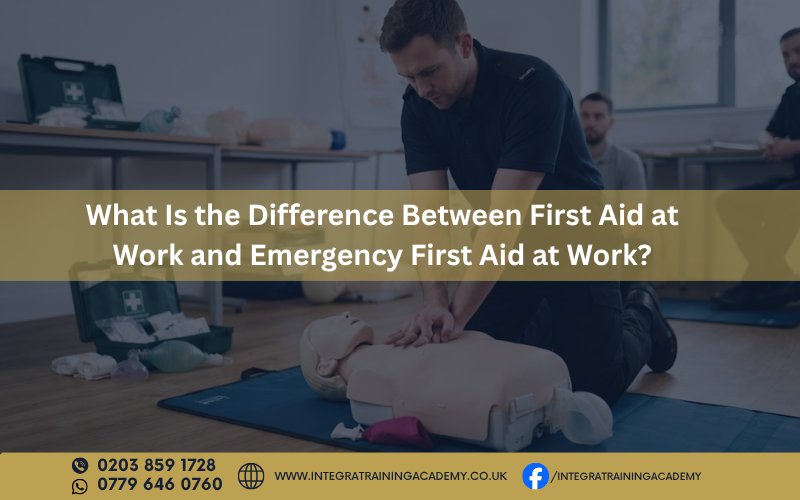
1. What Is the Difference Between First Aid at Work and Emergency First Aid at Work?
The main difference is the scope of training. Emergency First Aid at Work focuses on immediate emergency situations, while First Aid at Work includes emergency first aid plus a broader range of injuries and illnesses.
The Health and Safety Executive (HSE) identifies both as workplace first aid training options. Employers should use a first-aid needs assessment to determine the appropriate level of training for their workplace rather than automatically choosing the shorter course.
|
Comparison |
Emergency First Aid at Work (EFAW) |
First Aid at Work (FAW) |
|
Typical course duration |
1 day |
3 days |
|
Training focus |
Immediate emergency response |
Emergency response plus a wider range of injuries and illnesses |
|
Course coverage |
Core emergency first aid skills |
EFAW content and additional first aid topics |
|
Certificate validity |
3 years |
3 years |
|
Suitable workplaces |
Workplaces where the needs assessment identifies emergency-level training as appropriate |
Workplaces where the needs assessment identifies a need for more comprehensive first aid skills |
|
Requalification |
Usually a one-day EFAW course |
Usually a two-day FAW requalification course, completed before expiry |
The standard course durations are at least six hours for EFAW and at least 18 hours for FAW, excluding breaks. FAW training is delivered over a minimum of three days.
Neither qualification is automatically the right choice for every business. The decision should reflect workplace hazards, staffing, work patterns and the potential consequences of an accident.
2. What Is Emergency First Aid at Work (EFAW)?
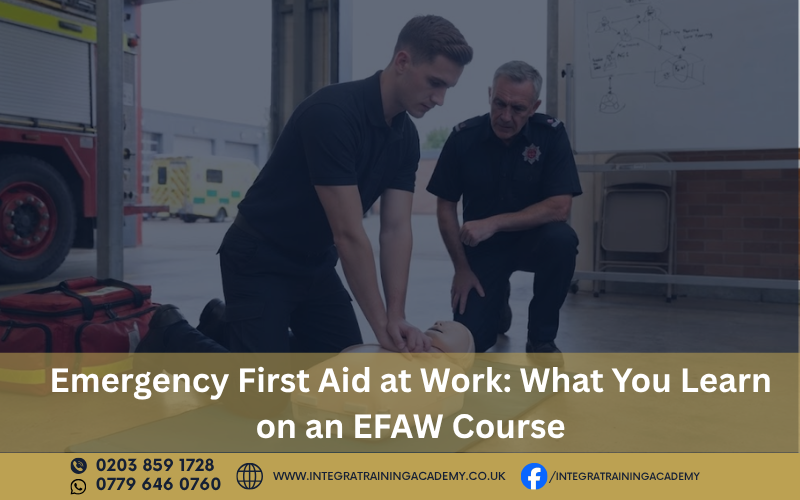
Emergency First Aid at Work is a one-day training course designed to prepare learners to provide immediate assistance when someone becomes injured or ill at work.
The course focuses on recognising an emergency, taking appropriate action and supporting a casualty until further medical assistance arrives.
What does an EFAW course cover?
Depending on the course syllabus, learners develop practical skills in areas such as:
-
Assessing an incident and identifying immediate dangers.
-
Checking a casualty's responsiveness and breathing.
-
Performing cardiopulmonary resuscitation (CPR).
-
Using an automated external defibrillator (AED).
-
Responding to choking.
-
Managing bleeding and shock.
-
Providing appropriate assistance for certain common injuries and illnesses.
-
Calling emergency services and communicating relevant information.
The course combines essential knowledge with practical training and assessment. Learners must demonstrate the skills required by the course, rather than simply memorising first aid information.
Who might benefit from EFAW training?
EFAW may be suitable for employees in workplaces where a first-aid needs assessment indicates that emergency-level training is appropriate.
Examples may include:
-
Small offices with relatively low-risk activities.
-
Employees working at smaller commercial premises.
-
Certain lone workers who need to respond to emergencies.
-
Staff at sites where the identified risks do not require the wider coverage of FAW.
These are examples, not automatic recommendations. A small workplace can still have significant hazards, and a larger workplace does not necessarily have identical first aid needs across every location.
For individuals who want to understand the course's practical value before enrolling, EFAW Training in Wembley is a relevant option to explore when considering local training with Integra Training Academy.
3. What Is First Aid at Work (FAW)?
First Aid at Work is a more comprehensive workplace first aid qualification. It includes the core emergency response skills covered by EFAW and extends training to a wider range of injuries and illnesses.
The standard initial FAW course takes at least three days, excluding breaks, and includes practical training and assessment.
What does a First Aid at Work course cover?
Alongside emergency first aid skills, the course covers a broader range of workplace situations, which may include:
-
Managing fractures and other musculoskeletal injuries.
-
Responding to burns and scalds.
-
Dealing with eye injuries.
-
Recognising and responding to certain medical emergencies.
-
Understanding how injuries and illnesses affect a casualty.
-
Providing appropriate first aid while arranging further medical assistance.
-
Assessing incidents and prioritising a casualty's needs.
The precise syllabus should be checked with the training provider to ensure it meets the relevant course requirements.
Who might need FAW training?
FAW may be appropriate where the workplace assessment identifies a need for more comprehensive first aid skills.
Examples include workplaces with:
-
Machinery, tools or potentially hazardous materials.
-
Manufacturing, warehousing or industrial operations.
-
Construction activities or other environments with significant physical hazards.
-
A broad range of foreseeable workplace injuries and illnesses.
-
Work patterns or site arrangements that require more extensive first aid provision.
The type of workplace alone does not determine the qualification. Employers should consider the specific activities taking place, the workforce, previous incidents and how quickly emergency medical assistance can reach the site.
4. Which Course Is Right for Your Workplace?
The choice between EFAW and FAW should begin with a first-aid needs assessment. This helps employers identify foreseeable emergencies, determine what first aid arrangements are necessary and decide how many trained first aiders may be required.
Consider these five factors
1. Workplace hazards
An office with limited physical hazards may have different first aid needs from a workshop where employees operate machinery or handle hazardous substances.
2. Workforce size and distribution
Consider how many people work on site, whether teams operate across different buildings and whether employees work alone or in isolated areas.
3. Working hours and staff availability
First aid cover needs to remain appropriate across shifts, weekends, holidays and other periods when designated first aiders may be absent.
4. Previous accidents and foreseeable injuries
Review accident records and risk assessments to understand the types of injuries or illnesses that could occur. Consider whether emergency-only training would adequately prepare staff for those situations.
5. Access to emergency medical assistance
A remote worksite may need different arrangements from a central office close to emergency services. The assessment should consider how quickly help can be summoned and what assistance may be needed in the meantime.
These factors reflect HSE guidance on assessing workplace first aid needs.
Example: An office versus a warehouse
Imagine two businesses are reviewing their first aid arrangements.
A small office may have relatively low physical risks and straightforward access to emergency services. Following a suitable assessment, its employer may determine that EFAW-trained first aiders provide the appropriate level of training.
A warehouse, by comparison, may involve vehicle movements, manual handling, machinery and risks associated with loading and unloading goods. The employer may identify a need for FAW training because staff could face a wider range of injuries.
These examples illustrate how workplace risks influence the decision. Neither scenario should be treated as a universal rule, and the final choice must reflect the actual circumstances.
5. Are First Aid at Work and EFAW Certificates Valid for the Same Length of Time?
Yes. Standard FAW and EFAW certificates for workplace first aid are valid for three years. First aiders should complete the appropriate requalification training before their certificates expire to maintain their qualification.
The requalification route depends on the qualification held:
-
EFAW: Complete the appropriate one-day EFAW requalification course.
-
FAW: Complete the appropriate two-day FAW requalification course before the existing certificate expires.
If a certificate expires, the individual is no longer considered competent to act as a workplace first aider on the basis of that certificate. They should check with a competent training provider about the appropriate route back to qualification.
Why annual refresher training matters
Although certificates last three years, HSE strongly recommends annual refresher training to help first aiders maintain their skills and confidence.
Refresher sessions can help learners revisit CPR, casualty assessment and other practical techniques. This is particularly useful because a workplace emergency may happen infrequently, leaving long gaps between opportunities to apply first aid skills.
Employers should also review their first aid arrangements when work activities, staffing or workplace hazards change.
6. What Are the Legal Requirements for Workplace First Aid in the UK?
The Health and Safety (First-Aid) Regulations 1981 require employers to provide adequate and appropriate first aid equipment, facilities and personnel so employees can receive immediate attention if they are injured or become ill at work.
However, the regulations do not prescribe one specific training course for every workplace. Employers must assess their circumstances and make appropriate arrangements. Depending on the findings, this may involve appointing someone to take charge of first aid arrangements or providing suitably trained first aiders.
Does every workplace need a qualified first aider?
Not necessarily. Some low-risk workplaces may meet their needs by appointing a person to manage first aid arrangements, including maintaining equipment and contacting emergency services.
Where the assessment identifies a need for trained first aiders, employers must ensure that appropriate personnel are available. There is no universal rule specifying the exact number of first aiders for every business.
Employers should also ensure that staff know:
-
Who their appointed first aider or responsible person is.
-
Where first aid equipment is located.
-
How to report an accident or medical emergency.
-
How to summon emergency services.
-
What arrangements apply when the usual first aider is absent.
Does the HSE approve first aid training providers?
The HSE no longer approves first aid training providers or workplace first aid qualifications. Since October 2013, employers have been responsible for selecting a competent training provider and checking that the training meets their requirements.
When choosing a course, check its syllabus, assessment arrangements, qualification recognition and suitability for your workplace needs.
7. Can EFAW Be Enough for Security Staff and Other Frontline Workers?
First aid skills can be particularly relevant for people working in public-facing and frontline roles, including security officers, event staff and site personnel.
These employees may need to respond to an injured visitor, a person who becomes unwell or an emergency involving a member of the public. Their first aid training should reflect the risks associated with their duties and the requirements applicable to their role.
EFAW may provide suitable emergency first aid training where the needs assessment supports that level. However, the broader coverage of FAW may be more appropriate where additional workplace risks justify it.
Security professionals should also distinguish between general workplace first aid training and any specific training requirements associated with their role or licence. They should check the applicable Security Industry Authority (SIA) requirements rather than assume that one qualification automatically meets every requirement.
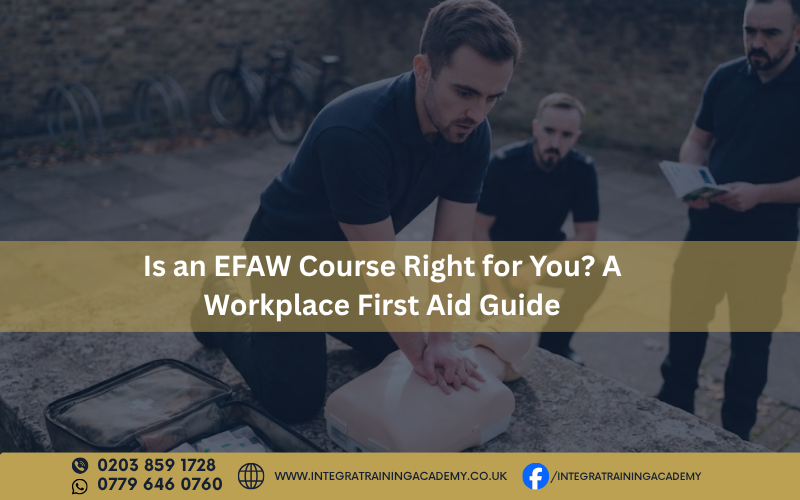
For anyone considering their first workplace first aid qualification, the guide Is an EFAW Course Right for You? A Workplace First Aid Guide can help explain the considerations involved in deciding whether emergency first aid training fits their needs.
8. How to Choose a Suitable First Aid Training Course
Once you understand the difference between FAW and EFAW, the next step is to select training that provides the appropriate skills for your responsibilities.
Use the following checklist before booking:
-
Identify your purpose: Decide whether you need a qualification for your current job, a new role or your employer's first aid arrangements.
-
Review workplace risks: If you are booking for a business, use the first-aid needs assessment to establish the required level of training.
-
Check the syllabus: Confirm that the course covers the required topics and includes appropriate practical training and assessment.
-
Verify the provider: Check the provider's competence, the qualification being offered and the arrangements for assessment and certification.
-
Confirm the duration: EFAW generally requires one day, while initial FAW training requires at least three days, excluding breaks.
-
Plan for requalification: Keep track of the certificate expiry date and arrange the appropriate refresher or requalification training.
If you are booking on behalf of an employer, remember that choosing a course is only one part of the process. You must also ensure that first aid arrangements remain adequate as staff, hazards and working patterns change.