First aid incidents can happen in almost any workplace, from a minor cut in an office to a serious injury on a construction site. Employers therefore need suitable arrangements for responding when an employee becomes ill or is injured at work. The appropriate arrangements depend on the workplace, its activities, workforce and identified risks.
Emergency First Aid at Work (EFAW) is one recognised level of workplace first aid training. It is designed to give a trained first-aider the knowledge and practical skills needed to provide emergency first aid to someone who becomes injured or ill while at work.
However, EFAW is not automatically the right course for every employee or every business. A workplace may need EFAW, First Aid at Work (FAW), another appropriate level of training, or a combination of arrangements depending on the findings of its first-aid needs assessment.
For employees, understanding the purpose of EFAW can help when deciding whether workplace first aid training is relevant to their role. For employers and managers, understanding the different training levels can help them make more informed decisions about workplace first aid provision.
This is particularly relevant for people working in environments where incidents may need an immediate response, including construction, security, retail, hospitality, warehousing, facilities management and events. The risks and first-aid requirements can vary considerably between these workplaces.
For learners researching EFAW Training in Wembley, the same principle applies: the important question is not simply whether a course has “EFAW” in its title, but whether the training is appropriate for the learner's role and the first-aid needs of the workplace.
What Is Emergency First Aid at Work Training?
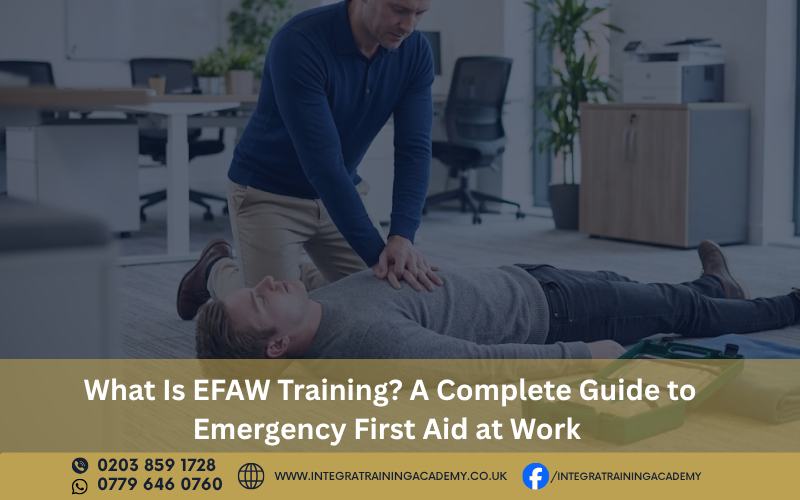
Emergency First Aid at Work training is workplace-focused first aid training intended to prepare a first-aider to respond to emergencies involving injury or illness at work.
HSE describes EFAW as a level at which a first-aider is qualified to give emergency first aid to someone who is injured or becomes ill while at work. FAW includes the EFAW syllabus but also covers a broader range of specific injuries and illnesses.
An EFAW course typically develops the ability to:
-
Assess an emergency situation safely.
-
Recognise when urgent assistance is required.
-
Provide appropriate initial first aid.
-
Respond to an unconscious casualty.
-
Perform CPR and use an AED.
-
Respond appropriately to choking.
-
Manage severe bleeding within the scope of the training.
-
Recognise and respond to shock.
-
Deal with appropriate minor injuries.
-
Call and communicate with the emergency services when necessary.
The current HSE EFAW syllabus includes these areas, alongside responsibilities such as reducing cross-infection risk, recording incidents and using available first-aid equipment.
The purpose is not to turn a workplace first-aider into a medical professional. Instead, the training provides structured knowledge and practical skills for the initial response while further medical assistance is obtained when necessary.
Who May Need EFAW Training?
There is no single job title that automatically means someone must complete an EFAW course. Employers should use their first-aid needs assessment to determine the appropriate level and number of trained first-aiders. HSE states that there are no hard-and-fast rules for the exact number of first-aiders required because workplace circumstances differ.
People who may be considered for EFAW training include:
Employees
Employees can undertake EFAW training where their employer identifies a need for trained first-aiders. Training may also be useful for individuals who want practical emergency-response skills relevant to their workplace.
Workplace first aiders
EFAW is specifically relevant to people selected to act as workplace first-aiders where this level of training meets the organisation's identified needs.
Managers and supervisors
Managers, supervisors and team leaders may be well placed to receive training where they are regularly present during working hours and may need to respond to an incident before emergency services arrive.
Office workers
An office may have fewer physical hazards than a construction environment, but illness and injuries can still occur. Depending on the workplace assessment, an organisation may identify a need for EFAW-trained personnel.
Retail and hospitality employees
Retail stores, restaurants, hotels and hospitality venues have different combinations of public interaction, equipment, food preparation, slips, trips and other potential hazards. First-aid arrangements should reflect the actual activities taking place.
Security professionals
Security guards, door supervisors and other security personnel may also benefit from EFAW training because their work can involve being present when an incident occurs.
Construction and warehouse workers
Construction, warehousing and other higher-hazard environments may require more extensive first-aid arrangements. HSE's guidance specifically identifies construction and warehousing among higher-hazard examples, meaning employers should carefully consider the types of injuries that could occur when deciding on first-aid provision.
Why Is Workplace First Aid Training Important?
The value of workplace first aid training is primarily practical: it can help ensure that someone with appropriate training is available to respond during the initial stages of an emergency.
A trained first-aider may be able to recognise a serious situation, summon appropriate help, provide initial assistance and follow established workplace procedures while waiting for further medical support.
This matters because an emergency can be confusing. Someone who has completed appropriate training is more likely to understand their role and the importance of acting within their level of training and competence.
Workplace first aid training can help people develop awareness of:
-
Emergency assessment
-
Basic life support
-
CPR
-
AED use
-
Unconscious casualties
-
Choking
-
Severe bleeding
-
Shock
-
Minor injuries
-
Emergency services
-
Workplace first-aid equipment
For cardiac arrest specifically, Resuscitation Council UK emphasises early recognition, calling 999, starting CPR and using an AED as soon as possible where one is available.
Training cannot guarantee a particular medical outcome. Its purpose is to give people appropriate knowledge and practical skills so they can respond more effectively within their role.
EFAW Training for Security Professionals
EFAW can be relevant to people working in security because security personnel may spend long periods monitoring premises, managing access or dealing with members of the public.
Examples include:
-
Door supervisors
-
Security guards
-
Event security personnel
-
Mobile security officers
-
Construction site security officers
-
Retail security personnel
-
Control-room or CCTV staff, where appropriate to their role
A security professional may be among the first people to become aware that someone has collapsed, been injured or requires assistance. Having suitable first-aid knowledge can therefore complement their wider workplace responsibilities.
However, security personnel should not assume that EFAW is automatically required simply because they work in security. Whether it is appropriate depends on the role, workplace arrangements and relevant first-aid needs.
For someone considering a first aid course for security guards, it is sensible to check whether the training meets the needs of the employer, contract or workplace rather than choosing a course based solely on its title.
What Does an EFAW Course Typically Cover?
The exact delivery and assessment arrangements can vary between providers, but HSE's current EFAW syllabus provides a useful framework for workplace emergency first aid training.
Common areas include:
-
Assessing an emergency situation.
-
Acting safely and promptly.
-
Dealing with an unconscious casualty.
-
CPR.
-
Automated external defibrillator (AED) use.
-
Choking.
-
Wounds and bleeding.
-
Shock.
-
Minor injuries such as cuts, grazes, bruises, burns and scalds.
-
First-aider responsibilities, including appropriate incident recording and prevention of cross-infection.
HSE's current guidance describes the standard EFAW course as a one-day course, with the syllabus and training/assessment covering at least six hours excluding breaks.
Practical participation is an important part of workplace first aid training. Learners should have an opportunity to develop and demonstrate relevant practical skills rather than simply reading theoretical information.
What Is EFAW Training and What Should Learners Expect?
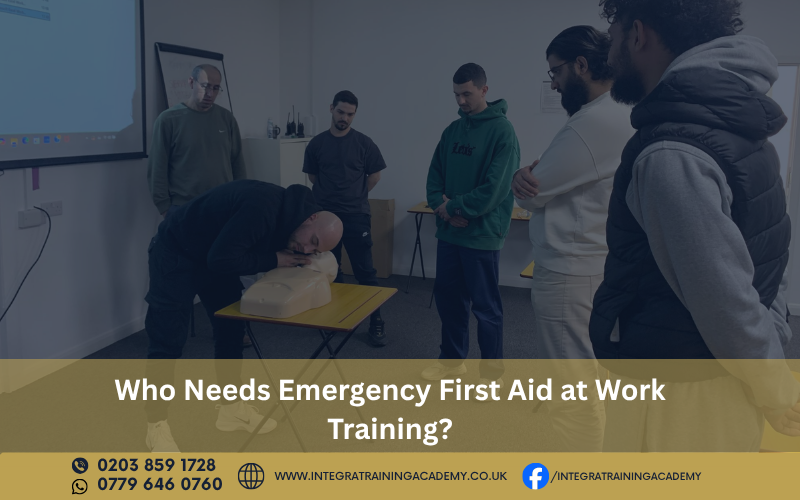
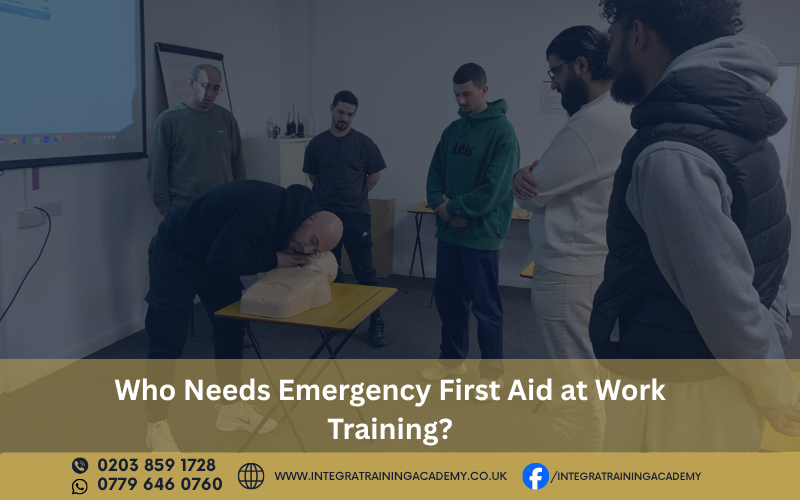
A common question before booking a course is, what is efaw training actually like in practice? In simple terms, it combines instructor-led learning with practical first-aid training designed around workplace emergencies.
Learners can generally expect a mixture of explanation, demonstration, discussion and practical participation. Depending on the provider and course arrangements, learners may practise relevant emergency-response skills using training equipment and take part in practical assessment activities.
The aim is to help learners understand not only what a first-aid procedure involves, but also when it may be appropriate and how to respond safely.
An EFAW course should also help learners understand the limits of their role. First aid is about providing appropriate immediate assistance; it does not replace professional medical assessment or treatment.
For employers, this practical element is particularly important when selecting a training provider. HSE recommends that employers carry out appropriate due diligence and ensure that providers are competent, deliver relevant course content and have suitable quality-assurance arrangements.
Which Workplaces May Benefit From EFAW Training?
EFAW can be relevant across many sectors when it matches the findings of the workplace's first-aid needs assessment.
Potential environments include:
-
Offices: where employees may need access to trained first-aid support.
-
Retail: where staff work around customers, equipment and stock.
-
Warehouses: where manual handling, vehicles and equipment may create additional risks.
-
Construction: where workplace hazards can be more significant.
-
Hospitality: including hotels, restaurants and other customer-facing environments.
-
Events: where temporary workplaces and large numbers of people may create different considerations.
-
Security operations: where personnel may work alone, on sites or around members of the public.
-
Manufacturing: where machinery and production processes influence first-aid needs.
-
Property management: where employees may work across different buildings or sites.
-
Facilities management: where staff may deal with varied environments and workplace hazards.
The key consideration is suitability. A training course should support the first-aid arrangements required by the actual workplace rather than being selected simply because it is convenient.
How Employers Can Assess Their First Aid Training Needs
Employers should begin with a first-aid needs assessment rather than choosing a training level in isolation.
Factors to consider can include:
-
Number of employees
-
Nature of the work
-
Workplace hazards
-
Size and layout of the premises
-
Working patterns and shifts
-
Lone or remote workers
-
Location of workers
-
Distance or access considerations
-
Existing first-aid arrangements
-
Availability of trained personnel
-
Workplace equipment
-
Potential injuries and illnesses
-
Visitors and other people who may be affected
HSE explains that the findings of the needs assessment should help determine whether trained first-aiders are required and what level of training is appropriate. There are no universal staffing numbers that apply identically to every workplace.
Employers should also make employees aware of their first-aid arrangements and ensure suitable first-aid equipment and facilities are available.
EFAW vs First Aid at Work
EFAW and First Aid at Work are different levels of workplace first-aid training. HSE explains that FAW includes the EFAW content while extending into a wider range of specific injuries and illnesses.
|
Area |
EFAW |
First Aid at Work |
|
Training scope |
Emergency first aid response |
Broader workplace first aid |
|
Typical level |
Emergency first-aid provision |
More comprehensive first-aid provision |
|
Workplace application |
Suitable where the needs assessment identifies this level |
Suitable where wider first-aid needs are identified |
|
Course duration |
Standard EFAW course is one day |
Standard FAW course is longer and more comprehensive |
|
Suitable circumstances |
Depends on workplace risks and first-aid needs |
Depends on workplace risks and first-aid needs |
Neither course should be viewed as universally appropriate for every workplace. The decision should be based on the organisation's first-aid needs assessment.
How to Choose an EFAW Training Course
Whether you are an employee booking your own training or an employer arranging courses for staff, consider several factors before choosing a provider.
Course content
Check that the EFAW course covers the appropriate workplace first-aid syllabus and practical skills.
Practical training
First aid is a practical subject, so check how practical learning and assessment are incorporated into the course.
Trainer competence
Employers should undertake appropriate due diligence regarding the competence of the training provider and trainers. HSE no longer approves first-aid training organisations, so employers have responsibility for selecting a competent provider.
Course duration and format
A standard EFAW course is structured as a one-day programme. Blended learning can also be used in workplace first-aid training where appropriate, but employers should check that sufficient time is allocated to classroom-based learning and practical assessment.
Certification and workplace suitability
Ask what certificate or qualification is issued and whether it is appropriate for the purpose for which the employer needs the training.
Most importantly, the course should correspond with the workplace's actual first-aid arrangements.
EFAW Training in Wembley
For learners searching for EFAW training in Wembley, location can be a practical consideration when choosing a workplace first aid course. Employees may want training close to where they live or work, while employers may need a convenient centre for individual learners or groups of staff.
Integra Training Academy provides EFAW training for learners looking to develop workplace emergency first-aid skills. Before booking, learners and employers should consider the course content, delivery format, practical training, assessment arrangements and whether the course is suitable for their intended workplace application.
The local availability of training can make it easier for learners to fit a one-day first aid course around work and other commitments, but convenience should be considered alongside the quality and suitability of the training itself.